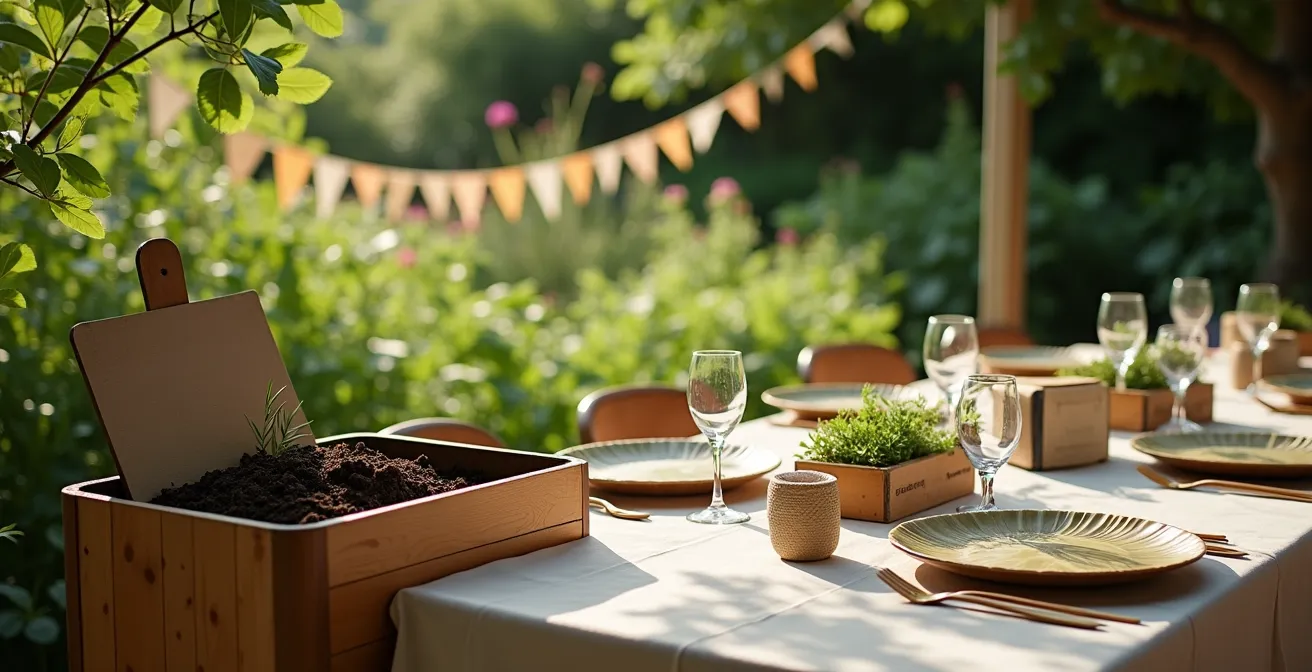
Most party supplies labeled “biodegradable” or “compostable” will not break down in a home garden and can be as harmful as plastic.
- Labels are often misleading, referring to industrial composting conditions that are unavailable to most households.
- Reusability consistently has a lower environmental impact than even the “best” single-use alternatives.
Recommendation: Adopt a sustainability auditor’s mindset. Scrutinize materials for their true end-of-life impact and prioritize durable, reusable items over disposable ones.
Every parent knows the scene: the joy of the party fades, leaving behind a mountain of trash bags filled with paper plates, plastic trinkets, and deflated balloons. The guilt can be significant, especially when you’ve tried to make greener choices. You bought the “biodegradable” balloons, the “compostable” plates, and the paper-wrapped favors. You followed the conventional wisdom. Yet, the volume of waste remains stubbornly high, and a nagging question persists: are these eco-friendly options actually helping, or are they just a form of expensive, feel-good greenwashing?
The truth is, the world of sustainable party supplies is a minefield of misinformation. Many products that promise a clean conscience are designed to break down only under specific, industrial conditions that are inaccessible to the average family. They can contaminate recycling streams or, worse, persist in the environment for years, posing a threat to wildlife and ecosystems. The key to reducing your party’s footprint isn’t just swapping one single-use item for another—it’s learning to audit these products like a sustainability professional.
But what if the solution wasn’t about finding the perfect disposable item, but about fundamentally shifting our perspective? This guide moves beyond surface-level claims. It provides a fact-based audit of common party supplies, exposing the hidden lifecycle costs of items marketed as “green.” We will dissect the claims, compare the true carbon footprints, and offer durable, practical, and genuinely sustainable solutions that reduce waste without sacrificing the festive spirit. It’s time to stop guessing and start making informed decisions based on data, not marketing.
This article will guide you through a comprehensive audit of your party supplies, from decorations to tableware. By examining the facts behind the labels, you’ll be equipped to host a celebration that is both joyful and genuinely gentler on the planet.
Summary: An Audit of Eco-Friendly Party Supplies
- Why “Biodegradable” Balloons Are Still Dangerous for Wildlife?
- How to Style a Birthday Banner so It Can Be Reused for 5 Years?
- Paper Streamers or Fabric Bunting: Which Has a Lower Carbon Footprint?
- The Glitter Problem: Safe Alternatives That Sparkle Without Pollution
- How to Build a Favor Bag Without Plastic Fillers Kids Throw Away?
- Why Single-Use Holiday Plates Contribute to 30% More Waste in December?
- The Goodie Bag Mistake: Why Plastic Trinkets End up in Trash in 24 Hours?
- Which Festive Tableware Is Safe, Unbreakable, and Eco-Friendly for Kids?
Why “Biodegradable” Balloons Are Still Dangerous for Wildlife?
The term “biodegradable” on a balloon package is one of the most misleading claims in the party industry. While latex is a natural product derived from rubber trees, the manufacturing process adds chemicals, plasticizers, and dyes that significantly hinder its ability to break down. Even when marketed as “100% natural latex,” these balloons persist in the environment long enough to cause serious harm. In fact, research from the University of Michigan reveals that soft plastics like latex balloons are 32 times more likely to kill seabirds than hard plastics when ingested. Birds and marine animals mistake the balloon fragments for food, leading to internal blockages and starvation.
Case Study: The University of Tasmania Composting Failure
To test the “biodegradable” claim under ideal conditions, researchers at the University of Tasmania placed latex balloons in industrial compost heaps. After 16 weeks of high heat and moisture, the blue and white balloons remained completely intact, with their knots still tied. This proves that even in a commercial facility, let alone a home compost bin, these products do not meaningfully degrade. They simply break down into smaller, more insidious microplastics that pollute soil and water.
The visual evidence is stark. Once released or discarded, these vibrant fragments become a permanent and dangerous part of the landscape.
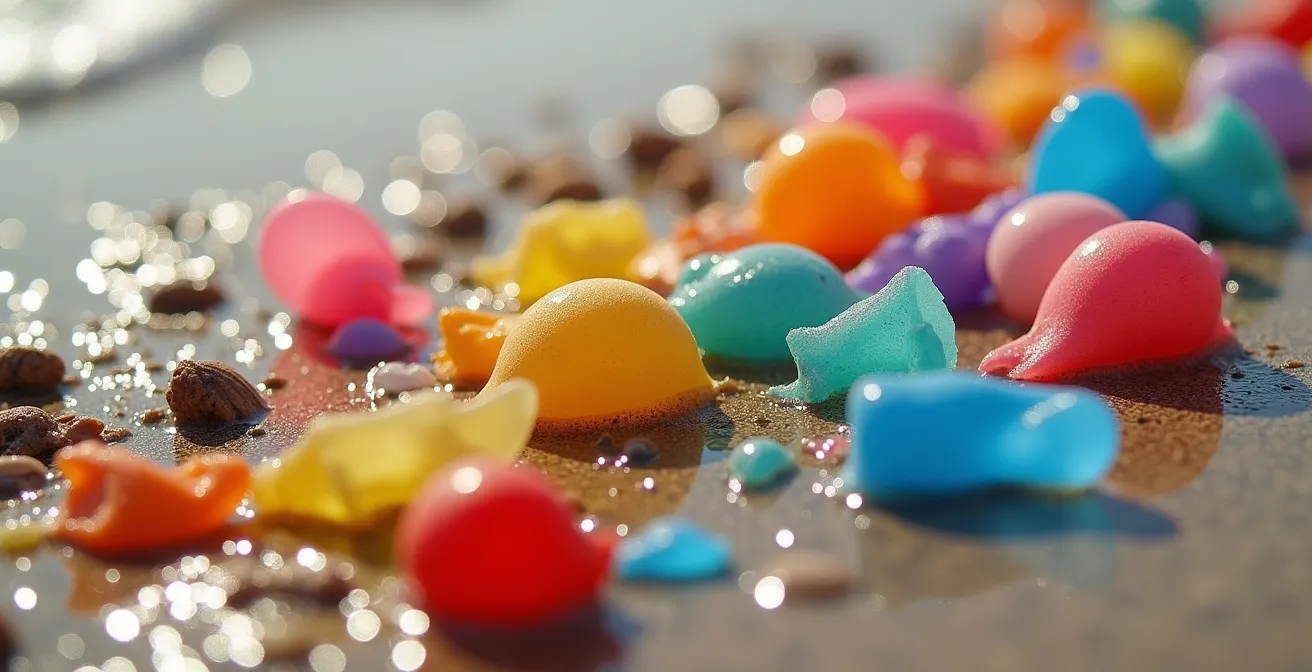
As this image illustrates, the fragmentation process does not eliminate the material; it just disperses the hazard. The conclusion is clear: there is no such thing as an environmentally safe balloon. The most responsible choice is to opt for reusable decorations like fabric bunting, paper garlands, or banners that can be enjoyed for years.
How to Style a Birthday Banner so It Can Be Reused for 5 Years?
The most sustainable decoration is one you already own. Shifting from single-use items to durable, reusable ones is the single most effective way to reduce party waste. A high-quality birthday banner is a perfect example of this principle in action. Instead of buying a new, themed paper or plastic banner for every party, investing in one timeless piece can serve a family for half a decade or more, creating traditions along the way. The goal isn’t necessarily a “zero waste” party, which can feel overwhelming, but a “minimal waste” approach that prioritizes longevity.
We’re not zero waste, but we’re minimal waste. We want to protect the environment without driving people nuts.
– Ellen Hockley Harrison, Greater Good Events, The Seattle Times
To ensure a banner has a five-year lifespan, focus on two key areas: material and design. For material, choose durable fabrics like canvas, felt, or thick cotton. These materials resist tearing, fading, and can often be spot-cleaned or gently washed. Avoid thin plastics or coated paper that crease and tear easily. For design, opt for timelessness over trends. A simple “Happy Birthday” in a classic font and versatile colors (e.g., neutrals with pops of primary colors) will be appropriate for a first birthday and a fifth, regardless of the child’s changing interests in cartoon characters. Consider banners with removable or interchangeable numbers to customize the age each year. Proper storage is also crucial: roll the banner neatly around a cardboard tube and store it in a dry, dark place to prevent creasing and fading.
Paper Streamers or Fabric Bunting: Which Has a Lower Carbon Footprint?
When choosing between disposable paper streamers and reusable fabric bunting, the answer isn’t always straightforward; it depends on the material’s lifecycle and how many times the reusable option is used. The initial manufacturing footprint of fabric is significantly higher than paper due to water usage, dyeing processes, and transportation. However, this initial carbon “debt” is paid off over time with repeated use. The key is reaching the break-even point, where the cumulative impact of buying new paper streamers for every party surpasses the one-time impact of producing the fabric bunting.
This analysis shows that the type of material is critical. A high-quality organic cotton bunting becomes the greener choice after about a dozen uses, while a polyester one, due to its fossil-fuel origins, requires over 20 uses to justify its initial footprint.
This table compares the lifecycle costs of common decorative materials, as detailed in a comprehensive analysis of party supply footprints.
| Material Type | Initial Carbon Footprint | Break-Even Point | Hidden Environmental Costs |
|---|---|---|---|
| FSC-Certified Undyed Paper Streamers | Low (0.5kg CO2 per party) | Single use acceptable | Minimal if composted properly |
| Virgin Paper with Glossy Coating | Medium (1.2kg CO2 per party) | Never – cannot be recycled | Plastic coating prevents decomposition |
| Organic Cotton Bunting | High (15kg CO2 initial) | Must reuse 12-15 times | Water usage, pesticide-free cultivation |
| Polyester Fabric Bunting | Very High (25kg CO2 initial) | 20+ uses required | Microfiber shedding with each wash |
For paper, the end-of-life scenario is paramount. While glossy, coated paper is destined for landfill, uncoated, FSC-certified paper can be composted at home. Paper’s potential for recycling is also high, although contamination remains an issue. The European Paper Recycling Council aims for a 76% paper recycling rate target by 2030 in Europe, but this relies on clean, unsoiled streams. Therefore, if you must use a single-use option, choose uncoated, certified paper. If you can commit to long-term reuse, organic cotton bunting is the superior choice after about 12 parties.
The Glitter Problem: Safe Alternatives That Sparkle Without Pollution
Traditional glitter is a beautiful menace. It is a microplastic by design, composed of tiny pieces of plastic (PET) bonded with aluminum. When washed down the drain or discarded, these non-biodegradable particles enter waterways, where they are ingested by plankton, fish, and eventually, humans. They absorb and concentrate toxins, persisting in the environment for hundreds of years. So-called “biodegradable” glitters are often no better, as they typically require industrial composting facilities to break down and can still contain plastic or aluminum coatings. The only truly safe sparkle comes from nature.
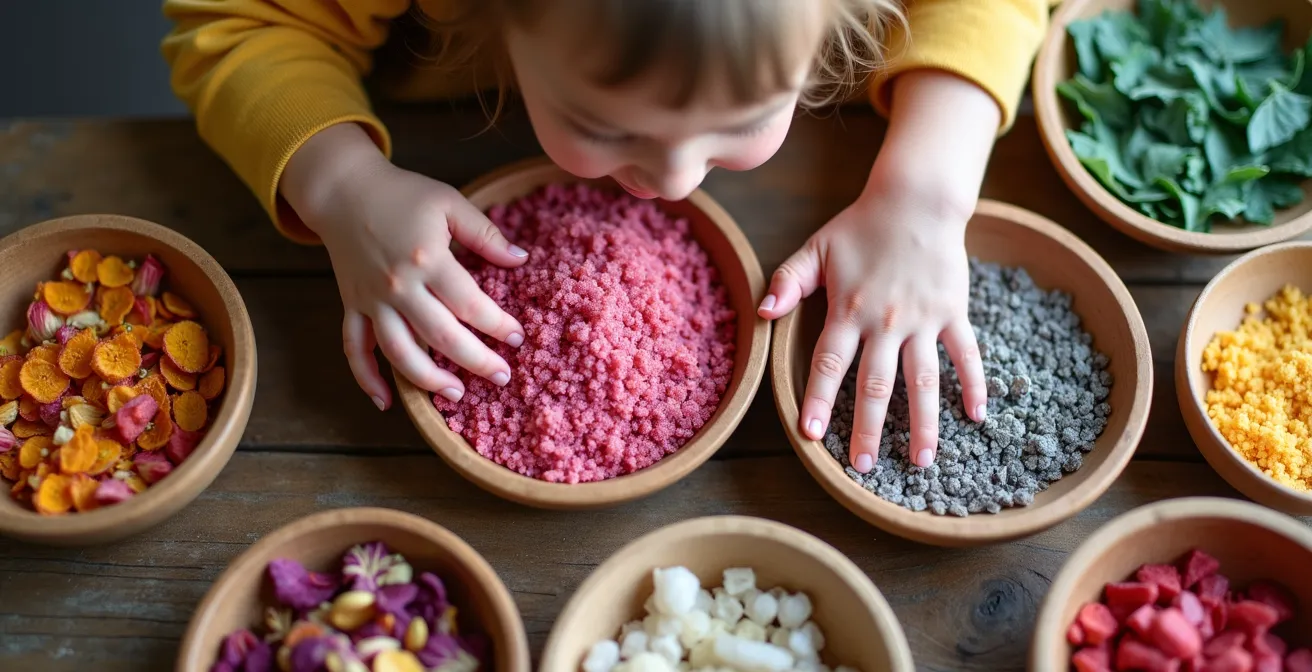
Instead of polluting with plastic, you can create stunning, tactile, and completely compostable sparkle for decorations, crafts, and even food. These alternatives not only protect the environment but also provide a wonderful sensory activity for children, connecting them to the natural materials. From the crystalline shine of colored salt to the metallic sheen of punched leaves, nature provides a full palette of textures and colors.
Your Action Plan: Creating Nature’s Sparkle
- Gather Materials: Collect fallen leaves with a natural sheen (like magnolia), colorful flowers (roses, lavender), and basic pantry items like salt, sugar, or rice.
- Process for Texture: Finely chop dried flower petals for colorful confetti. Use a hole punch on dried leaves for uniform, metallic-looking dots. Grind colored salt or sugar for a fine, crystalline dust.
- Add Natural Color: Mix coarse salt, sugar, or uncooked rice in a sealed bag with natural colorants like turmeric (yellow), beet juice (pink), or spirulina powder (green). Shake vigorously and let dry.
- Create Sparkling Decor: Sprinkle your natural glitter onto tables. Freeze edible flowers or colored salt into ice cubes for drinks. Use a non-toxic glue to decorate cardboard crowns or place cards.
- Compost After Use: At the end of the party, all of these materials can be safely swept into your home compost bin, returning nutrients to the soil.
By embracing these natural alternatives, you eliminate a significant source of microplastic pollution while introducing a creative and beautiful element to your celebration. It’s a clear win for both the party and the planet.
How to Build a Favor Bag Without Plastic Fillers Kids Throw Away?
The traditional party favor bag is a primary source of post-party waste. It’s typically filled with cheap plastic trinkets that have a high novelty factor but near-zero long-term play value. These items are often broken or discarded within hours, heading straight to a landfill. The solution is to shift the focus from “things” to “experiences” or “consumables.” A successful party favor is one that is used, eaten, or grown, leaving behind a positive memory instead of a plastic toy.
Case Study: The Success of Experience-Based and Consumable Favors
A growing movement among parents demonstrates the power of this shift. According to reports on eco-friendly party trends, favors that provide an activity have a much higher engagement rate. For example, one parent who gave out “Little Gardener Kits” with pots, soil, and seeds found that 85% of the recipient families actually grew their plants. This stands in stark contrast to the near-100% disposal rate of typical plastic toys. Other successful ideas include “experience vouchers” (e.g., “one trip to the park with the birthday child”) or recipe cards for the party cake, extending the celebration’s joy.
Instead of a bag of disposable items, consider creating a single, high-quality, themed kit. This approach feels more thoughtful and provides a genuine activity for the child to take home. The key is to bundle a few simple, sustainable materials around a creative theme.
- Baking Kit: A metal cookie cutter, a recipe card printed on recycled paper, and a small glassine bag of organic sprinkles.
- Art Kit: A block of natural beeswax modeling clay or a set of colored pencils with a small recycled-paper notebook.
- Garden Kit: A small terracotta pot, a compressed coir soil disk, and a packet of native wildflower or herb seeds.
- Science Kit: A recipe and pre-measured dry ingredients (in paper bags) for making homemade playdough, along with a small vial of natural food coloring.
These kits not only eliminate plastic waste but also encourage creativity, learning, and family connection—a far more valuable gift than a plastic parachute man.
Why Single-Use Holiday Plates Contribute to 30% More Waste in December?
The holiday season, particularly December, sees a dramatic spike in household waste, driven largely by consumption of single-use items. According to the Center for Biological Diversity’s 2021 analysis, Americans generate 23% more tons of waste during this month alone, which translates to millions of extra tons of trash. Disposable tableware, especially paper plates with festive designs, are a major contributor. While they offer convenience, their environmental cost is significant and often misunderstood.
The primary issue with most paper plates is that they are not recyclable or compostable. To prevent them from getting soggy, they are coated with a thin layer of plastic (polyethylene). This coating makes it impossible for paper mills to process them, so they are filtered out and sent to landfill. Worse, when well-intentioned party hosts toss these plates into the recycling bin, they cause a much larger problem: recycling stream contamination.
Case Study: The Contamination Cascade
Recycling facilities rely on clean, homogenous materials. As detailed in reports on recycling quality, a single greasy, plastic-coated paper plate can contaminate an entire bale of clean recyclable paper. When this happens, the facility has no choice but to divert the entire batch—tons of otherwise valuable material—to landfill. The cost and effort of sorting out these contaminants are too high. Therefore, using one “recyclable-in-theory” paper plate can negate the recycling efforts of an entire neighborhood, making it a net negative for the system.
This hidden impact reveals that the convenience of single-use plates comes at a steep environmental price. The most effective way to combat this is to switch to reusable plates. If single-use is absolutely unavoidable, one must seek out specific uncoated, certified compostable options and ensure they are disposed of in a commercial compost facility, not a home recycling bin.
The Goodie Bag Mistake: Why Plastic Trinkets End up in Trash in 24 Hours?
The fundamental flaw of the traditional goodie bag lies in a simple concept: the difference between novelty and play value. The small, colorful plastic trinkets that fill these bags—spin tops, yo-yos, sticky hands—are designed for a single purpose: to provide a momentary thrill. They are high-novelty but possess almost no long-term play value, which is the ability of a toy to facilitate creative, open-ended, and sustained engagement.
Cheap plastic trinkets have high novelty but near-zero ‘play value.’ They don’t engage creativity or open-ended play, leading to immediate boredom and disposal once the initial thrill is gone.
– Child Development Specialist, Analysis of Party Favor Longevity
Once the brief novelty wears off, usually within minutes, the toy has no further purpose. It cannot be integrated into other forms of play, it doesn’t challenge the child, and it doesn’t spark imagination. As a result, it is quickly forgotten and destined for the trash, often within the same day. This rapid journey from gift to garbage is not only wasteful but also teaches children that objects are disposable and lack intrinsic value. The environmental impact is direct: these small, low-quality plastics are non-recyclable and contribute to the vast problem of plastic pollution.
A direct comparison between high-novelty and high-play-value toys makes this distinction clear. The goal for a sustainable favor is to choose items from the right side of this chart.
| Toy Type | Play Duration | Engagement Type | Environmental Impact |
|---|---|---|---|
| Plastic Parachute Man | 5-10 minutes | Single action, repetitive | Non-recyclable, immediate trash |
| Bouncy Ball | 20 minutes | Limited interaction | Lost quickly, becomes litter |
| Modeling Clay Block | 5+ days | Creative, open-ended | Reusable, non-toxic if natural |
| Story Dice Set | Weeks to months | Imaginative, variable | Long-term use, often wooden |
By consciously choosing favors with high play value—like a small set of wooden blocks, a packet of seeds, or a block of beeswax clay—you give a gift that lasts. It reduces waste and provides a richer, more meaningful experience for the child.
Key takeaways
- “Biodegradable” does not mean home compostable; most such products require industrial facilities and can harm wildlife.
- The environmental impact of a reusable item is almost always lower than a single-use one after a certain number of uses (the “break-even point”).
- A successful party favor is defined by its long-term “play value” or utility, not its initial novelty.
Which Festive Tableware Is Safe, Unbreakable, and Eco-Friendly for Kids?
Choosing tableware for a kid’s party involves a trilemma: it needs to be safe for children, durable enough to prevent breakage, and genuinely eco-friendly. Many parents, trying to avoid plastic, turn to alternatives like bamboo or wheat straw plates. However, this is another area rife with greenwashing. Many of these products are not pure, natural materials. They are composites, held together with a problematic binding agent.
Investigation: The Hidden Melamine in “Eco” Plates
Independent testing has revealed a dirty secret in the “eco-tableware” industry. Many bamboo and wheat straw fiber plates and cups contain melamine-formaldehyde resin to bind the plant fibers together and make them durable. This resin is a type of plastic that renders the product entirely non-compostable and non-recyclable. Furthermore, it can leach chemicals into food when heated. When these plates were put to a “home compost test”—shredded and buried for months—they remained completely intact. They are, in essence, plastic plates disguised as a natural product.
So what are the genuinely safe and sustainable options? For single-use needs, the best choices are uncoated products made from 100% plant fiber, such as pure palm leaf or sugarcane bagasse. Palm leaf plates are made simply by pressing a dried leaf and are fully home-compostable. Bagasse, a byproduct of sugarcane processing, is also a good choice, though it typically requires commercial composting for a full breakdown. For a long-term investment, nothing beats the durability and safety of reusable materials.
This table compares the top materials for kid-friendly tableware, providing a clear guide for making an informed choice based on safety and true end-of-life impact.
| Material | Production Footprint | End-of-Life | Safety Rating | Durability |
|---|---|---|---|---|
| Stainless Steel | High initial | Infinitely recyclable | Excellent | Lifetime use |
| Food-Grade Silicone | Moderate | Specialized recycling only | Excellent | 10+ years |
| Pure Palm Leaf | Very low | Home compostable | Excellent | Single event |
| Sugarcane Bagasse | Low | Commercial compost | Good | Single use |
For parents seeking the ultimate combination of safety, unbreakability, and eco-friendliness, stainless steel and food-grade silicone are the clear winners for reusable options. If a disposable plate is necessary, pure palm leaf is the only option that reliably composts in a home garden.
By applying this auditor’s mindset, you can move past the greenwashing and make choices that have a real, positive impact. Your next celebration can be a testament to the fact that a fantastic party and a healthy planet are not mutually exclusive.
Frequently Asked Questions on Eco-Friendly Party Supplies
What coating is used to make ‘eco’ glitter reflective?
Many ‘eco’ glitters use aluminum or thin plastic layers for shine. Only mineral-based coatings like mica are truly compostable.
Has it been certified for home composting?
Look for TÜV Austria OK compost HOME certification, not just ‘biodegradable’ claims which often indicate industrial composting only.