Well-being and development
Raising healthy, confident children involves far more than meeting basic needs. True well-being emerges from the delicate interplay between physical health, cognitive stimulation, emotional security, and environmental design. Each decision—from the fabric touching your baby’s skin to the layout of your playroom—shapes how children experience the world and develop their potential.
Understanding child development as a holistic journey rather than a checklist empowers parents to make informed choices. This comprehensive approach considers how product safety impacts skin health, how furniture positioning affects posture, how play patterns build problem-solving skills, and how daily routines nurture emotional resilience. The following sections explore the core pillars that support thriving children from infancy through early childhood.
Protecting Physical Health Through Material and Product Choices
Your child’s skin is their first line of defense, yet it’s five times thinner than adult skin during infancy. This vulnerability makes material selection critical for children with sensitive conditions like eczema or dermatitis.
Understanding Fabric Safety and Certification
Organic cotton and bamboo fabrics offer distinct advantages, but not all “organic” labels guarantee safety. GOTS certification (Global Organic Textile Standard) verifies that materials meet strict chemical residue limits throughout the entire supply chain. When examining labels, look for the certification number and licensing body—authentic GOTS tags include traceable identifiers that can be verified online.
Pesticide residues in conventional cotton can trigger inflammatory responses in sensitive skin. Think of your child’s skin like a sponge: whatever touches it repeatedly gets partially absorbed. Choosing certified organic materials reduces this chemical exposure during the thousands of hours children spend in their clothing.
Navigating Greenwashing in Baby Products
Marketing terms like “eco-friendly,” “natural,” or “green” carry no regulatory meaning. Genuine commitments to safety include:
- Third-party certification seals (GOTS, OEKO-TEX Standard 100)
- Transparent supply chain information
- Specific chemical exclusion lists published on company websites
- Willingness to provide test results upon request
Similarly, selecting appropriate detergents preserves the integrity of organic fabrics. Enzymes and optical brighteners can break down natural fibers and leave residues that irritate skin. Fragrance-free, plant-based formulas specifically designed for baby clothes maintain both fabric quality and skin health.
Supporting Physical Development Through Ergonomic Everyday Items
The objects children use daily—backpacks, shoes, furniture—either support or strain their developing musculoskeletal systems. Small adjustments yield significant long-term benefits.
School Bags and Weight Distribution
Carrying excessive weight during growth spurts can alter posture patterns that persist into adulthood. The 10% rule serves as a helpful baseline: a loaded backpack shouldn’t exceed 10% of your child’s body weight. For a 40-pound kindergartener, that’s just 4 pounds—roughly two hardcover books.
Proper strap adjustment matters as much as weight. Straps should be tightened so the bag sits snugly against the mid-back, not sagging toward the buttocks. This positioning distributes weight across stronger shoulder and back muscles rather than pulling backward on developing spines. Rolling bags offer an alternative for older children, though they present tripping hazards in crowded hallways and don’t build the core strength that properly worn backpacks can develop.
Footwear Choices and Developmental Myths
Contrary to persistent marketing claims, young children don’t need arch support. Pediatric research shows that flat feet are normal until around age six, as the arch develops naturally through walking and play. Rigid arch supports can actually interfere with the small muscles that strengthen through natural foot movement.
Accurate sizing matters more than supportive features. Measure feet at home by having your child stand on paper, tracing their foot, and measuring from heel to longest toe. Add a thumb’s width (roughly half an inch) for growth room. Shoes that are too small show telltale signs: red marks on skin after removal, reluctance to walk, or the child frequently removing shoes. Hand-me-down shoes pose risks because they’ve molded to another child’s unique gait pattern, potentially encouraging compensatory movements.
Leveraging Play for Cognitive and Problem-Solving Growth
Play isn’t frivolous—it’s how children’s brains build neural pathways for logic, creativity, and executive function. The right balance of challenge and safety transforms everyday activities into developmental opportunities.
Designing Age-Appropriate Challenges
Think of cognitive development like strength training: the “weight” must match current capacity while offering slight resistance to stimulate growth. A puzzle that’s too easy bores a child; one that’s impossibly difficult frustrates them. The sweet spot—activities that require effort but yield success within 15-20 minutes for preschoolers—builds perseverance and problem-solving confidence.
Visual clues bridge the gap between a child’s current skills and the next developmental level. For a three-year-old learning to sort shapes, color-coding the sorting bins (blue stars go in the blue box) provides scaffolding that can be gradually removed as mastery develops.
Balancing Indoor and Outdoor Play Safety
Indoor play offers controlled variables ideal for focused skill-building, while outdoor play introduces unpredictability that teaches risk assessment. A child navigating a playground learns to gauge distances, test surface stability, and respond to unexpected movements from peers—capabilities that structured indoor toys can’t fully develop.
Duration matters as much as content. Toddlers typically sustain focused attention for 5-10 minutes on a single activity, while five-year-olds may engage for 15-20 minutes. Respecting these natural limits prevents the frustration that shuts down learning.
Nurturing Emotional Intelligence Through Role-Play and Expression
Emotional development often receives less attention than physical or cognitive milestones, yet it profoundly affects how children navigate relationships, manage stress, and develop self-awareness.
The Psychological Power of Pretend Play
When a child pretends to be a doctor comforting a stuffed animal, they’re practicing empathy by inhabiting another perspective. Role-play creates a safe laboratory for testing emotions and social scripts. A shy child might embody a confident superhero, experimenting with assertiveness without real-world consequences.
Character costumes versus abstract dress-up items offer different developmental values. A specific superhero costume provides clear behavioral scripts (heroes are brave, help others), while generic capes or scarves require children to invent their own narratives—a more demanding creative task. Both have merit at different developmental stages.
Breaking Gender Stereotypes in Play
Encouraging boys to engage in nurturing dress-up play (caring for babies, cooking, nursing) builds emotional vocabulary and caretaking skills that benefit all future relationships. When adults show genuine interest rather than subtle discomfort with cross-gender play, children receive permission to explore the full range of human experience.
Integrating costumes into daily routines rather than limiting them to special occasions normalizes imaginative play. A child who regularly “becomes” different characters develops flexible thinking and emotional regulation as they practice shifting between emotional states.
Creating Holistic Daily Routines for Physical and Emotional Health
Well-being emerges from consistent patterns rather than isolated healthy choices. Daily routines that integrate physical activity, nutrition, rest, and emotional check-ins create the foundation for resilient children.
Connecting Nutrition to Mood and Behavior
Blood sugar fluctuations directly impact emotional regulation in young children. A toddler’s meltdown at 11 a.m. might stem from a sugary breakfast that spiked and crashed, leaving them physiologically unable to manage frustration. Protein and fiber at breakfast—think eggs and whole grain toast rather than sweetened cereal—provide sustained energy that supports stable moods.
This connection works both ways: chronic stress affects digestion and appetite. A child experiencing anxiety about preschool might refuse breakfast, creating a cycle where low energy worsens emotional coping.
Balancing Activity and Restorative Rest
Modern schedules often swing between overstimulation and passive screen time, missing the restorative rest that developing nervous systems require. True rest isn’t just sleep—it’s unstructured time for the brain to process experiences. A “sleep sanctuary” free from screens, with dim lighting and consistent bedtime routines, signals to the body that it’s safe to transition from alertness to rest.
Recognizing burnout signs in children—increased emotional reactivity, regression in previously mastered skills, frequent illness—allows parents to adjust demands before chronic stress takes hold. Even young children benefit from a simple emotional vocabulary practice: “How does your body feel right now? What do you need?”
Designing Home Environments That Support Brain Development
Your home’s physical environment acts as a silent teacher, either supporting or hindering how children explore, focus, and learn. Intentional design choices optimize spaces for developing brains.
Managing Visual and Auditory Stimulation
Visual noise—the clutter of too many colors, patterns, and objects competing for attention—taxes executive function in young children. Their brains haven’t yet developed adult-level filtering capabilities, so they process every visual stimulus equally. A playroom with neutral base colors and toys rotated into view rather than all displayed simultaneously reduces cognitive load and extends focus duration.
Color psychology suggests that blues and greens promote calmness, while reds and oranges increase energy and alertness. Matching color schemes to room function—soothing tones in bedrooms, energizing colors in active play spaces—supports children’s natural regulatory rhythms.
Auditory stressors like constant background television, jarring toy sounds, or echoing hard surfaces create low-level stress that accumulates throughout the day. Soft textiles, rugs, and designated quiet zones give children’s nervous systems regular relief.
Furniture Sizing and Ergonomic Positioning
When a child’s feet dangle without floor contact while seated, their core muscles work constantly to maintain stability—energy that should go toward learning. Proper desk and chair height means:
- Feet rest flat on the floor or a footrest
- Knees bend at roughly 90 degrees
- Elbows rest comfortably on the work surface without shoulder hunching
Soft seating like bean bags feels cozy but provides insufficient support for tasks requiring focus. The postural instability demands constant micro-adjustments that fragment attention. Lighting positioned to prevent glare on work surfaces prevents eye strain that manifests as headaches or resistance to reading.
Movement breaks every 20-30 minutes aren’t indulgence—they’re neurological necessity. Young children’s brains consolidate learning during physical activity. A two-minute dance break or wall push-ups actually enhances subsequent focus rather than disrupting it.
Partnering With Healthcare Providers for Optimal Development
Effective healthcare navigation transforms routine appointments into opportunities for early intervention and parent education. Preparation and advocacy ensure children receive comprehensive developmental support.
Documenting Symptoms and Developmental Observations
Pediatricians often have just 15 minutes per appointment. Arriving with written documentation—specific examples of concerning behaviors, dates when symptoms appeared, what interventions you’ve tried—maximizes this limited time. “She seems behind” provides less actionable information than “She doesn’t yet stack two blocks at 18 months, though she walked at 12 months.”
Asking directly about developmental delays opens conversations that providers may not initiate if physical growth appears normal. Questions like “Her expressive language seems limited compared to peers—what should I watch for?” signal that you’re a partner in monitoring development.
Tracking Milestones Without Creating Anxiety
Developmental timelines describe typical ranges, not rigid deadlines. A child who walks at 16 months rather than 12 isn’t necessarily delayed—they’re within normal variation. The key distinction: Is progress happening, even if slowly? Or has development stalled or regressed?
Regression triggers—when previously mastered skills disappear—warrant immediate discussion. A three-year-old who stops speaking in sentences after a new sibling arrives might be experiencing typical stress response, or it could signal something requiring intervention. Healthcare providers distinguish between these scenarios through systematic assessment.
Documenting progress for medical appointments works best with specific examples: “Last month she used two-word phrases; now she regularly uses three to four words together.” This concrete data enables providers to assess whether intervention or watchful waiting suits the situation.
Celebrating micro-wins—the small incremental progresses that precede major milestones—keeps perspective balanced. Before a child walks independently, they pull to stand, cruise along furniture, and stand momentarily unassisted. Recognizing these building blocks reduces anxiety about timeline comparisons.
Supporting child well-being and development requires viewing each element—physical health, cognitive stimulation, emotional growth, environmental design, and healthcare partnership—as interconnected rather than isolated. Small, consistent choices in each domain compound over time, creating the conditions where children naturally thrive. By understanding the “why” behind recommendations, parents move from anxiously following rules to confidently adapting principles to their unique family context.
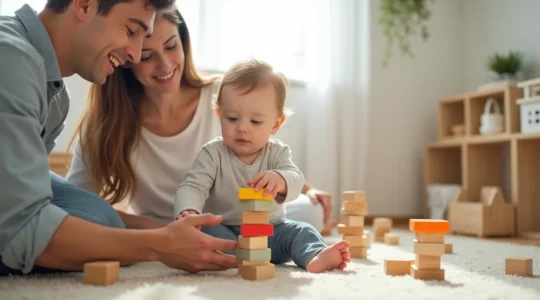
Observing Your Child’s Growth: A Pediatrician’s Guide to Less Anxiety
The constant pressure to track developmental milestones is creating more parental anxiety than it solves. The key isn’t to track harder, but to observe better. Cognitive growth is not a linear race; skills often appear, disappear, and re-emerge as the…
Read more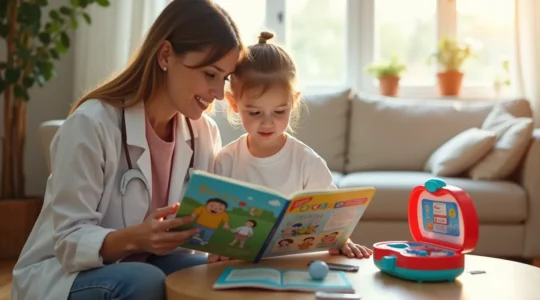
How to Prepare for Pediatrician Visits and Get Real Answers
The key to a productive pediatrician visit is shifting from being a worried observer to a prepared, data-driven advocate for your child. Vague concerns are easily dismissed; documented evidence, like video, forces a deeper investigation. Strategic communication and scheduling turn…
Read more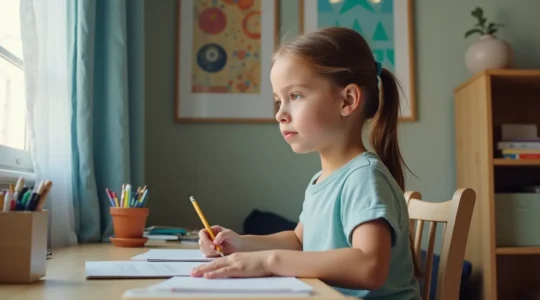
The Pediatric OT’s Guide: Which Ergonomic Chair Truly Prevents Slouching During Homework?
In summary: Preventing slouching requires an entire ergonomic system, not just a single chair. Proper support for the feet is non-negotiable as it stabilizes the pelvis and the entire spinal column. Environmental factors like lighting and even clothing waistbands provide…
Read more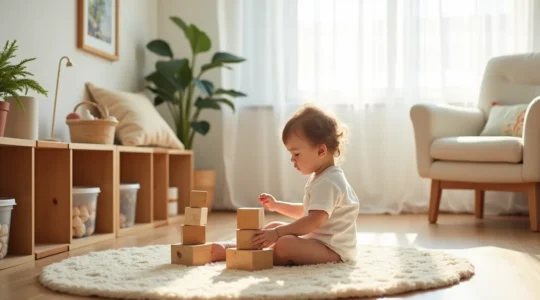
How Does Your Home Environment Impact Cognitive Growth in Toddlers?
Conventional wisdom on child development overlooks the single most powerful tool you have: the architectural design of your home. Visual and auditory clutter (like messy shelves and background TV) actively consumes a toddler’s limited cognitive resources, hindering focus and language…
Read more
How to Foster Holistic Well-Being in Children Without Overscheduling?
Contrary to popular belief, a child’s well-being isn’t built on a packed schedule of activities, but on the quiet, consistent nurturing of their internal biological systems. Unstructured downtime is a biological necessity for developing a calm and resilient nervous system….
Read more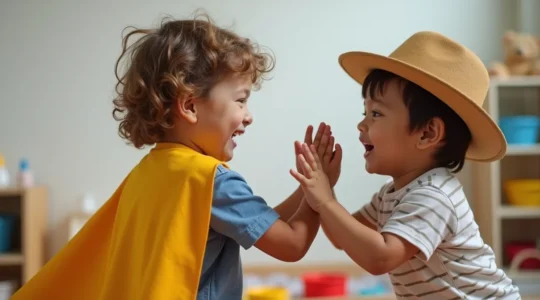
Why Role-Playing in Fancy Dress Is Crucial for Your Child’s Emotional Intelligence
Many parents see dress-up as chaotic, messy play. However, developmental psychology reveals it’s a structured cognitive workout essential for building emotional intelligence. By embodying different characters, children are not just pretending; they are actively developing empathy, self-regulation, and abstract thinking…
Read more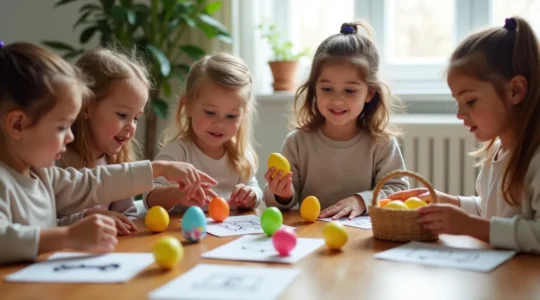
From Sugar Rush to Brain Boost: How to Turn an Egg Hunt Into a Cognitive Scavenger Hunt for Preschoolers
Transforming a traditional egg hunt into a cognitive scavenger hunt isn’t about making it harder; it’s about making it smarter by intentionally designing it as a learning experience. The key is to create clues that match a child’s “Zone of…
Read more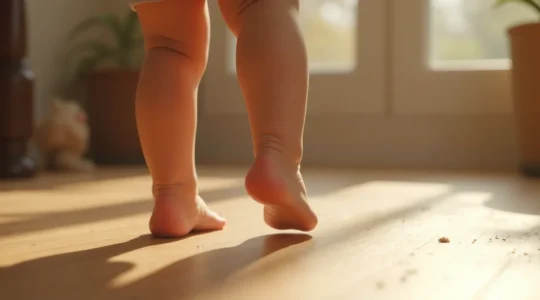
What Shoe Features Truly Support Healthy Foot Development for First Walkers?
In summary: The best shoe mimics being barefoot, with a flat, flexible sole that allows for natural muscle development. Proper fit is more critical than brand; you must learn to check for length, width, and depth to avoid developmental issues….
Read more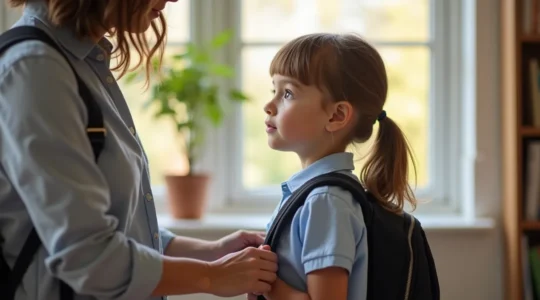
How to Select an Ergonomic School Bag to Prevent Back Pain in Primary School?
In summary: Choosing an ergonomic bag is not about features, but about maintaining your child’s biomechanical integrity under load. Proper fit is determined by the bag’s alignment with the spine and torso, not the child’s age or grade level. How…
Read more
Why are organic fabrics critical for eczema-prone babies in winter?
The key to managing your baby’s winter eczema isn’t just choosing soft fabrics, but systematically reducing their total “chemical load” from all sources. Conventional cotton and many “eco-friendly” fabrics hide pesticide residues and processing chemicals that directly trigger flare-ups. True…
Read more