Toys & games
Every parent has witnessed that magical moment when a child becomes completely absorbed in play—building an impossibly tall block tower, negotiating rules with a sibling, or working through a challenging puzzle with furrowed concentration. These aren’t just adorable moments to capture on camera. They represent crucial windows of learning where cognitive pathways form, social skills develop, and confidence builds through hands-on exploration.
The world of toys and games has evolved dramatically, offering everything from traditional wooden blocks to programmable robots. Yet the fundamental question remains unchanged: how do we choose play experiences that truly nurture our children’s growth while creating joy in our homes? This comprehensive resource explores the developmental science behind play, offers practical frameworks for selecting age-appropriate toys, and demonstrates how games—whether cooperative board games or outdoor physical challenges—can strengthen both individual skills and family bonds.
Why Play Matters: Core Developmental Benefits
Play isn’t frivolous entertainment that happens between “real” learning. It is the learning, functioning as children’s primary laboratory for understanding the world. When a toddler repeatedly fills and dumps containers in the bath, she’s exploring foundational physics concepts like volume and gravity. When siblings negotiate the rules of their imaginary game, they’re practicing conflict resolution and perspective-taking.
Cognitive Growth Through Problem-Solving
Puzzles, building toys, and strategy games create what developmental psychologists call “productive struggle”—challenges difficult enough to require effort but achievable enough to avoid frustration. A four-year-old matching puzzle pieces develops visual discrimination and spatial reasoning. An eight-year-old programming a simple robot learns algorithmic thinking and debugging. These experiences build resilience alongside logic, teaching children that mistakes are information, not failures.
Social and Emotional Learning
Cooperative games transform play from individual entertainment into relationship-building opportunities. Unlike competitive games with elimination mechanics that send some children to the sidelines, cooperative formats require teamwork to achieve shared goals. Children learn to read emotional cues, manage disappointment, celebrate collective success, and link their actions to others’ experiences—the foundation of empathy development. Even the simple act of explaining rules to a younger sibling builds communication skills and patience.
Physical Development and Motor Skills
Active play combats increasingly sedentary childhood lifestyles while building essential motor competencies. Wheeled toys develop balance and coordination. Climbing structures teach risk assessment and body awareness. Classic street games revived in backyards encourage cardiovascular health while teaching spatial navigation. Fine motor skills strengthen through manipulating puzzle pieces, stacking blocks, and dealing cards—abilities that directly support writing readiness and self-care tasks like buttoning and zipping.
Educational Play Integrated Into Daily Life
The most powerful learning often happens not through designated “educational toys” but through playful approaches to everyday activities. This integration avoids what early childhood experts call “schoolification”—the tendency to transform joyful exploration into rigid, worksheet-style instruction that can diminish natural curiosity.
Consider these natural learning opportunities already embedded in your routine:
- Cooking together teaches measurement, fractions, sequencing, and chemical reactions without a single flashcard
- Storytelling before bed builds vocabulary, narrative structure, and literacy foundations more effectively than isolated phonics drills
- Bath time becomes a physics lab when children experiment with floating, sinking, pouring, and water displacement
- Car rides offer observational learning about seasons, weather patterns, community helpers, and geography
Creating organized creative spaces at home supports this natural learning. Categorizing supplies so children can independently access materials fosters autonomy and decision-making. Choosing washable materials reduces adult anxiety about mess, making everyone more relaxed. Establishing consistent cleanup routines teaches responsibility while making the space sustainable. Rotating supplies maintains novelty and interest without requiring constant purchases. Even practical considerations like table height matter—furniture scaled to children’s bodies communicates that this space belongs to them.
Choosing Toys That Grow With Your Child
The best toy investments offer longevity of play—remaining engaging across developmental stages rather than being quickly outgrown. This happens when toys allow open-ended use rather than dictating a single correct way to play.
Classic Building Toys and Spatial Reasoning
Wooden blocks, construction sets, and interlocking bricks promote spatial reasoning—the ability to mentally manipulate objects and understand how shapes relate in three-dimensional space. This skill predicts later mathematics achievement more reliably than early number recognition. When selecting building toys, consider wood type for durability, compare how different shapes enable varied structures, and ensure storage solutions that keep heavy sets accessible but safely organized. The narrative possibilities matter too; abstract blocks encourage completely open-ended storytelling compared to themed sets that suggest specific scenarios.
Puzzles for Logic and Resilience
Puzzles uniquely combine visual-spatial processing, fine motor control, and persistence. The key is matching piece count and image complexity to current ability—challenging enough to engage but not so difficult that frustration overwhelms. Children as young as two can manage 4-6 piece puzzles with distinct images. By age five, many handle 24-48 pieces with moderate detail. Success depends partly on image selection; high-contrast pictures with clear boundaries work better than photographs with subtle color variations. Managing missing pieces calmly (they happen!) and timing sessions before fatigue sets in maintains positive associations with productive struggle.
Technology-Enabled Toys: Active vs. Passive
Not all screen-related toys function identically. Passive technology entertains children who watch or push buttons to trigger pre-programmed responses. Active technology requires children to problem-solve, create, or direct the experience. Screen-free coding toys using physical blocks to create sequences teach programming logic without screens. Programmable robots where children design behaviors offer more learning value than app-based games with fixed levels. Evaluating longevity matters here too—will the toy remain engaging after the novelty wears off? Can it be used in multiple ways? Be aware of gender bias in marketing that steers girls toward nurturing-themed tech and boys toward building-oriented options; both benefit from both types.
Robotics and Coding for Future Skills
Accessible robotics kits prepare children for technology-rich futures while teaching immediate skills like algorithmic thinking—breaking complex problems into sequential steps. Entry-level options now exist for children as young as four. Compare programmable features across products; some use physical cards or buttons, others use visual coding apps, and advanced versions employ text-based programming. Integration of art and robotics through projects like designing robot costumes or programming light displays appeals to diverse interests. Common frustrations include connectivity issues and unclear instructions; having troubleshooting patience and starting with simpler projects builds confidence before tackling complex challenges.
Active and Outdoor Play for Healthy Bodies
Physical play creates immediate joy while establishing movement patterns and fitness habits that protect long-term health. The challenge for many families involves making active play engaging enough to compete with sedentary entertainment, especially in small spaces or challenging weather.
Reviving classic street games like tag, hopscotch, and red light/green light requires no equipment and unlimited free play value. Creating obstacle courses using household items—couch cushions, painter’s tape lines, cardboard boxes—costs almost nothing while developing motor planning and coordination. Games adapt successfully to small spaces with creativity; even apartment dwellers can set up indoor bowling with plastic bottles or practice balloon volleyball.
Outdoor exploration zones transform yards or even balconies into learning laboratories. Encouraging sensory engagement through mud, water, sand, and natural materials develops scientific observation. Designing safe climbing structures—whether purchased or DIY—teaches risk assessment and builds strength. Attracting wildlife for observation by hanging bird feeders or planting pollinator gardens connects children to ecosystems. Selecting non-toxic plants matters when curious toddlers taste everything. Storing outdoor loose parts like sticks, stones, shells, and fabric scraps in weatherproof containers enables creative building and imaginary play.
Wheeled toys from balance bikes to scooters systematically develop coordination and spatial awareness. Assess balance readiness by observing whether children can walk heel-to-toe and stand on one foot briefly. Fit helmets correctly—level on the head, snug but comfortable, positioned two finger-widths above eyebrows. Compare wheel sizes for your terrain; larger wheels handle sidewalk cracks better while smaller wheels offer more control for beginners. Teaching braking techniques early prevents crashes. Maintain bearings and wheels regularly so the toy remains safe and enjoyable.
Games That Connect: Social Play and Family Bonding
Games create structured opportunities for interaction, offering relationship-building benefits beyond individual skill development. The key involves choosing formats and adapting rules to maximize inclusion and minimize frustration.
Cooperative Play and Empathy Development
Cooperative games where everyone wins together or loses together teach fundamentally different lessons than competitive formats. Children practice working toward shared goals, reading teammates’ needs, and celebrating collective achievement. Avoiding elimination mechanics keeps all players engaged throughout. Choosing between physical active games and seated board games depends on your children’s current energy levels and the time of day. Timing the transition to calmer activities before overtiredness creates meltdowns requires reading individual cues—some children show increased silliness while others become irritable.
Family Game Nights and Tabletop Gaming
Regular family game sessions strengthen bonds through shared positive experiences and friendly competition. Modern board games designed for families introduce concepts like resource management, strategic planning, and probability in engaging formats. The developmental benefits extend beyond game mechanics: children practice handling losing gracefully, reading instructions, and accepting that rules apply equally to everyone. Evaluate replay value before purchasing—will the game remain interesting after multiple sessions? Modify rules for younger siblings to keep everyone participating; perhaps they play on a team with an adult or use simplified objectives. Time game night duration appropriately; 30-45 minutes works better for younger children than marathon sessions that end in exhaustion.
Inclusive Play for All Abilities
Facilitating inclusive social interaction requires thoughtful adaptation so children of varied abilities can participate fully. Modify active games like tag for inclusivity—perhaps everyone moves at a walk, or players can tag by gently touching a pool noodle the tagger holds. Balance teams fairly by mixing ages and abilities rather than creating competitive imbalances. Adapt for physical differences by changing movement requirements or playing surfaces. Support children in resolving disputes autonomously by teaching simple conflict-resolution language rather than immediately intervening. Time the end of games before someone becomes upset, ending on a positive note that makes children eager to play again.
Card Games for On-the-Go Learning
A simple deck of cards provides portable learning opportunities that enhance math and memory skills anywhere. Classic games teach probability basics, pattern recognition, and strategic thinking. Building working memory happens naturally as children track which cards have been played. Select durable decks that withstand enthusiastic handling. Many card games encourage speed and quick reflexes alongside cognitive skills. Organize storage for travel using a small zipper pouch that protects cards and fits easily in a bag for restaurant waits or long car rides.
Choosing toys and games with intentionality doesn’t mean eliminating spontaneity or joy—quite the opposite. Understanding the developmental purposes behind different play types helps you create an environment rich in learning opportunities disguised as pure fun. Whether you’re rotating puzzle complexity as your child’s skills grow, adapting outdoor spaces to invite exploration, or establishing weekly game nights that become treasured family traditions, you’re investing in capabilities that extend far beyond childhood. Play is the foundation where confidence, creativity, social connection, and resilience take root—gifts that will serve your children throughout their lives.
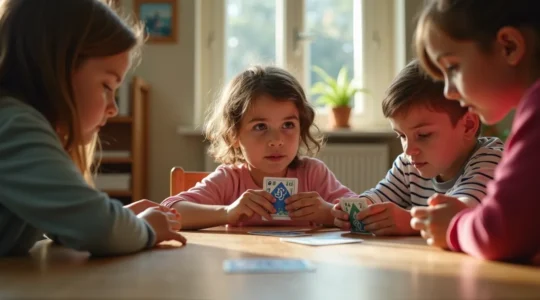
How Card Games Improve Math Skills Faster Than Drills?
In summary: Card games transform abstract math concepts like “greater than” into tangible, rule-based play. Simple games like “War” and “Memory” can be adapted with addition or equations to grow with your child’s skills. Game-based learning is neurologically superior to…
Read more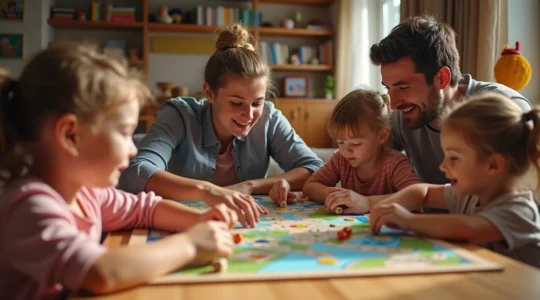
Beyond Candy Land: The Real Strategy Games for Kids That Parents Secretly Love to Play
The secret to a successful family game night isn’t finding the “perfect” game, but becoming a “Game Night Architect” who actively shapes the experience. Cooperative games are the ideal starting point to build teamwork and eliminate the “sore loser” problem….
Read more
How to Teach Leadership with Group Games That Include Every Child
Contrary to popular belief, leadership isn’t a trait reserved for the most assertive children; it’s a set of skills that inclusive games can teach everyone. Effective games replace elimination with “re-engagement loops” to ensure continuous participation and learning. True cooperation…
Read more
3-Wheel or 2-Wheel Scooter: When to Make the Switch?
Making the leap to a two-wheel scooter is less about age and more about a technical readiness that can be measured through specific skill assessments. Dynamic balance, demonstrated by gliding for 3-5 seconds, is the most reliable indicator of readiness….
Read more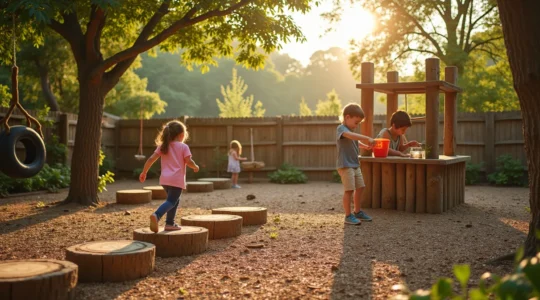
How to Build a Backyard Adventure Zone on a Budget?
Building a thrilling backyard for your kids isn’t about expensive plastic slides and swing sets; it’s about intentional landscape design. True adventure and development come from a ‘natural playscape’ designed with low-cost materials like dirt, logs, and native plants. This…
Read more
How to Organize Outdoor Games That Actually Get Kids Off Screens
The secret to getting kids off screens isn’t restriction; it’s engineering outdoor play that delivers a bigger psychological and developmental payoff. Classic games like Capture the Flag are powerful tools for teaching strategy and real-world teamwork that screens can’t replicate….
Read more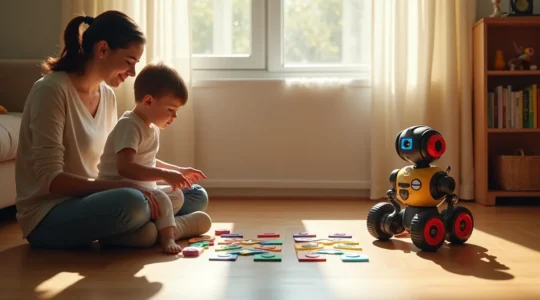
Screen-Free Coding Robots: A Critical Investment in Your Child’s Cognitive Architecture?
The true value of screen-free coding robots lies not in teaching a specific programming language, but in building a foundational cognitive architecture for problem-solving. They transform abstract logic into tangible, physical sequences, making concepts like cause-and-effect concrete for pre-readers. The…
Read more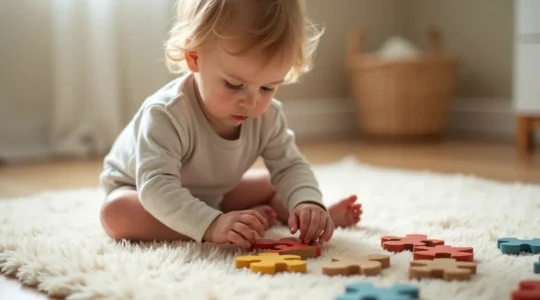
How Puzzles Teach Frustration Tolerance to Toddlers?
The true value of a puzzle isn’t in its completion, but in using it as a safe space for your toddler to practice managing difficult emotions. Instead of focusing on the finished picture, a therapist’s approach prioritizes the process of…
Read more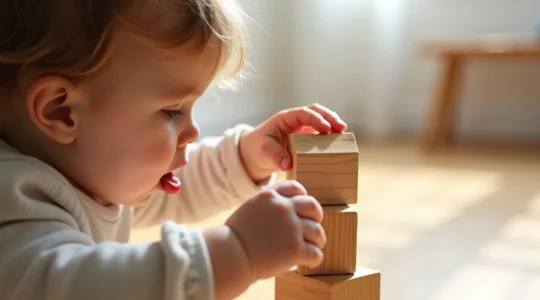
Why Simple Wooden Blocks Outperform Battery Toys for IQ?
Simple wooden blocks are superior to electronic toys because they train a child’s brain in flexible, divergent problem-solving, not just prescribed pattern recognition. They develop foundational spatial skills that are directly linked to future mathematical success. They foster symbolic abstraction—the…
Read more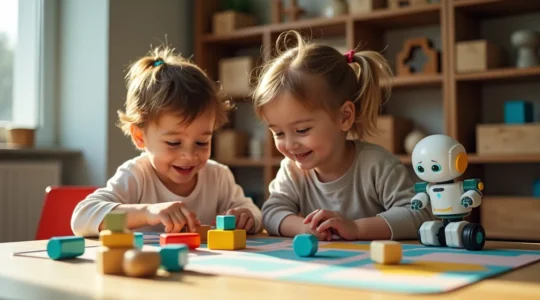
Do STEM Toys Actually Teach Coding to Preschoolers?
Despite marketing promises, most “coding” toys teach passive button-pushing, not active problem-solving. A toy’s true value is its ability to foster hypothesis, testing, and debugging—skills often better developed by simple, open-ended toys like blocks. Features like expandability and tactile interaction…
Read more