
The perfect holiday table for your kids isn’t about finding disposable plates; it’s about investing in reusable pieces that offer verifiable safety, aesthetic durability, and a surprisingly low long-term cost.
- Reusable melamine or silicone sets cost significantly less over three years than “eco-friendly” disposables.
- Safety labels can be misleading; look for specific standards like LFGB certification over generic “BPA-free” claims.
Recommendation: Shift your mindset from single-use convenience to long-term value by assessing tableware based on its material integrity, true lifecycle cost, and proven safety credentials.
The perennial holiday dilemma for parents is a tale of two tables. On one hand, the elegant fine china, sparkling under the festive lights—a disaster waiting to happen in the hands of a toddler. On the other, a mountain of single-use paper or plastic plates, convenient yet wasteful, contributing to that all-too-familiar post-celebration guilt. Many of us have tried to find a middle ground with so-called ‘eco-friendly’ disposables, only to question their actual environmental benefit.
The common advice is to simply “buy reusable,” but this guidance often stops short of being truly helpful. It doesn’t navigate the complex world of materials, from bamboo composites that can crack to vintage plastics that might harbor hidden dangers. We are told things are “non-toxic” or “sustainable” without being given the tools to verify these claims. This leaves us making choices based on cute patterns rather than confidence in the product’s safety and longevity.
But what if the solution wasn’t just about finding a better plate, but about adopting a better framework? The key is to think like an eco-design consultant. This isn’t about a one-time purchase; it’s about curating a collection of items that embody your values of style, safety, and sustainability. It’s about understanding the concepts of material integrity, cost-per-use, and verifiable safety.
This guide will walk you through that exact framework. We will deconstruct the marketing claims, analyze the true cost and lifecycle of popular options, and provide you with the knowledge to choose festive tableware that is not only safe and unbreakable but also a chic and conscious addition to your family’s traditions for years to come.
This article provides a complete framework for making an informed choice, from understanding the true cost of disposables to decoding safety labels and ensuring your chosen set lasts for many holidays to come.
Summary: The Conscious Parent’s Guide to Festive Tables
- Why Single-Use Holiday Plates Contribute to 30% More Waste in December?
- How to Hand-Wash Bamboo Tableware to Prevent Cracking After 5 Uses?
- Bioplastic Disposables or Melamine Sets: Which Is Cheaper Over 3 Years?
- The BPA Danger in Vintage Plastic Plates Passed Down From Grandma
- The “Hypoallergenic” Label Trap: What Brands Don’t Tell You About Testing
- Which Eco-Friendly Party Supplies Actually Compost in a Home Garden?
- How to Store Melamine Tableware to Prevent Scratches Until Next Year?
- How to Store Shovels and Buckets to Prevent Standing Water?
Why Single-Use Holiday Plates Contribute to 30% More Waste in December?
The allure of a quick cleanup during the chaotic holiday season is powerful, making single-use plates a tempting option. However, this convenience comes at a significant environmental price. While the exact percentage can fluctuate, the trend is clear: holiday festivities dramatically increase household waste. This isn’t just about wrapping paper and packaging; the tableware we choose plays a major role. Every disposable plate, cup, and fork adds to the landfill burden, creating a direct conflict with the growing desire for a more sustainable lifestyle.
The problem is magnified by the sheer volume of gatherings, from classroom parties to large family dinners. Opting for disposables at each event creates a staggering amount of waste that persists long after the memories have faded. This cycle forces a critical question: is a few minutes saved on washing up worth the long-term environmental cost? Recognizing this impact is the first step toward shifting our perspective from temporary convenience to lasting value.
This isn’t about inducing guilt, but about framing the choice with full awareness. By understanding the scale of the waste problem, the decision to invest in a high-quality reusable set becomes more than just a practical choice; it becomes a conscious act of environmental stewardship. It’s a tangible way to align our holiday celebrations with our values, teaching our children by example that tradition and responsibility can, and should, go hand in hand. The goal is to create joy without creating excess refuse.
Ultimately, moving away from the disposable mindset opens the door to exploring durable, stylish, and safer alternatives that enrich our celebrations rather than detracting from them.
How to Hand-Wash Bamboo Tableware to Prevent Cracking After 5 Uses?
Bamboo tableware is often marketed as the perfect eco-friendly solution, but its durability is highly dependent on its composition and care. Many “bamboo” plates are actually a composite of bamboo powder mixed with a melamine resin binder. This combination creates a lightweight, rigid material, but it also introduces vulnerabilities. The most critical point of failure is thermal shock. Exposing these plates to extreme temperatures, such as in a microwave, can be catastrophic for their lifespan. In fact, a scientific study published in PubMed found that its service life can be reduced by more than 10-fold under microwave heating, leading to premature cracking and delamination.
Therefore, preserving the material integrity of bamboo-melamine tableware relies entirely on proper handling. Gentle hand-washing is always the superior method. Using a soft sponge with mild soap and warm—not hot—water prevents the resin from degrading. Aggressive scrubbing or using abrasive powders can create micro-scratches on the surface, which can later harbor bacteria and become the starting points for larger cracks.
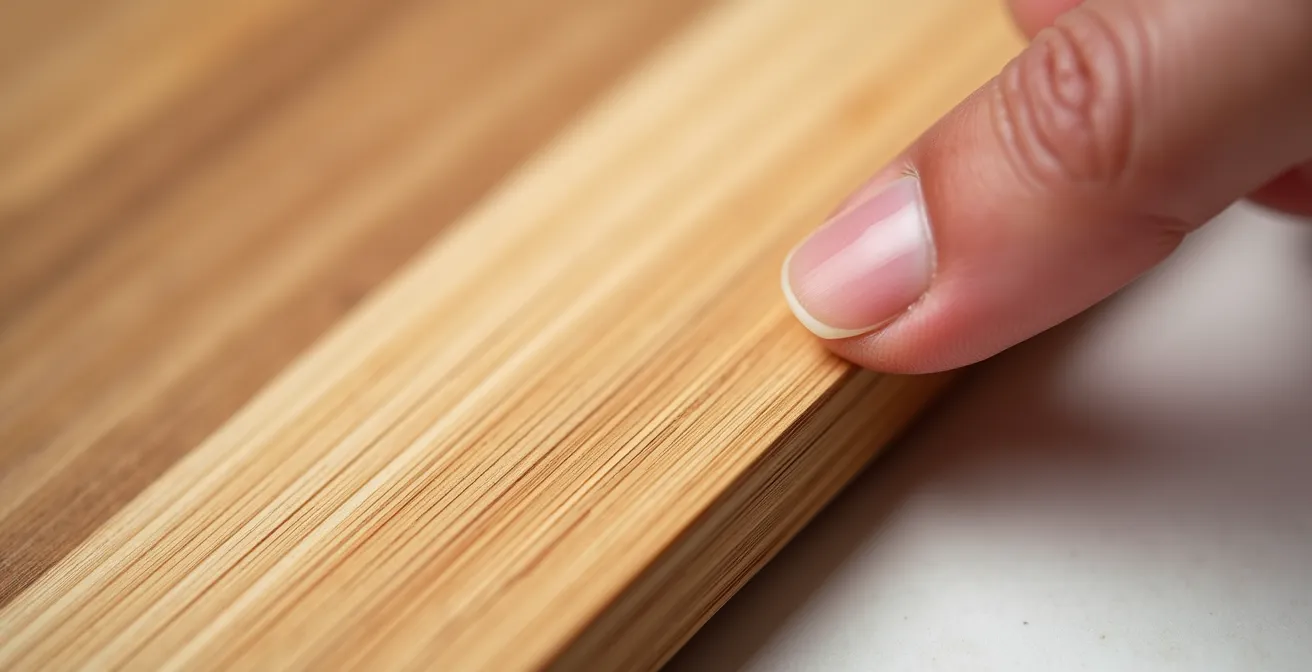
After washing, it is crucial to dry the items immediately and thoroughly with a soft cloth. Allowing them to air-dry can let moisture seep into any unseen pores or tiny cracks, causing the bamboo fibers to swell and weaken the plate from within. Regular inspection is part of the care routine; running a fingertip along the edges and across the surface can help you detect any new roughness or peeling that signals the item is nearing the end of its safe-use life.
Your Checklist for Bamboo Tableware Longevity
- Use only the top rack of the dishwasher at temperatures below 70°C/160°F, if the manufacturer permits.
- Hand wash with mild soap and warm (not hot) water for the best and safest results.
- Dry immediately and thoroughly with a soft cloth to prevent any moisture absorption.
- Inspect regularly for micro-cracks by running your fingers along the edges and surface.
- Replace the item immediately if you notice any delamination, deep scratches, or surface peeling.
This diligent care ensures you get the maximum value and safety from your investment, transforming a potentially fragile item into a reliable part of your festive collection.
Bioplastic Disposables or Melamine Sets: Which Is Cheaper Over 3 Years?
When comparing the cost of children’s tableware, the initial price tag is deeply misleading. A pack of “eco-friendly” bioplastic disposable plates might seem like a bargain for a single event, but this thinking ignores the crucial concept of cost-per-use. A high-quality, reusable melamine or silicone set requires a larger upfront investment, but its value is realized over time. To make a truly informed financial decision, we must project the costs over a realistic timeframe, such as three years of holiday gatherings, birthdays, and parties.
The following table, based on market analysis like that seen in recent eco-friendly product comparisons, breaks down the true financial impact of each choice.
| Cost Factor | Bioplastic Disposables | Melamine Sets |
|---|---|---|
| Initial Purchase (4-person set) | $8-12 per event | $40-60 one-time |
| Annual Usage (12 events) | $96-144 | $0 (reusable) |
| 3-Year Total Cost | $288-432 | $40-60 |
| Replacement Cost | N/A (single use) | $10-15 (occasional piece) |
| Disposal Cost | Industrial composting fees vary | $0 (long-term use) |
| True 3-Year Cost | $300-450+ | $50-75 |
The numbers speak for themselves. The recurring cost of disposables, even if purchased for just a dozen events per year, quickly eclipses the one-time cost of a durable set. The reusable set’s cost-per-use plummets with every meal, while the disposable option’s cost remains fixed and high. This financial reality is often demonstrated by brands that focus on durable, multi-use products.
Case Study: The WeeSprout Savings Model
WeeSprout began in 2015 with a mission to create affordable eco-friendly dishware for kids. Their research showed that families using their silicone divided plates (priced at $35-40 per set) saved an average of $200 annually compared to purchasing disposable ‘eco-friendly’ plates for parties and daily use. The plates’ versatility – being dishwasher-safe, temperature-resistant, and suitable for both hot and cold meals – meant families used them not just for holidays but year-round, dramatically reducing the cost-per-use to under $0.10 after the first year.
This analysis proves that investing in reusability is not just an environmental decision, but a sound financial strategy that pays dividends for years to come.
The BPA Danger in Vintage Plastic Plates Passed Down From Grandma
Heirloom items carry a powerful sentimental weight, and a set of vintage children’s plates from a grandparent can feel like a precious link to the past. However, when it comes to plastics from previous generations, nostalgia must be tempered with caution. Many older plastic items, especially those made before the 2000s, were manufactured using chemicals now known to be harmful, such as Bisphenol A (BPA) and phthalates. These chemicals can leach from the plastic into food, particularly when the plastic is heated, scratched, or comes into contact with fatty or acidic foods.
The concern over these chemicals is not hypothetical. Leading pediatric health organizations have raised alarms about their potential impact on child development. As the American Academy of Pediatrics has noted in its recommendations, the science is increasingly pointing towards safer, more inert materials. In a review of these guidelines, one resource highlighted this shift in expert consensus:
Recent pediatric health studies now strongly favor stainless steel over all alternatives, particularly as research has identified more pathways by which chemicals in plastics can disrupt endocrine and neurological development
– American Academy of Pediatrics, Nature Kids Co. review of AAP recommendations
This doesn’t mean you have to throw away those sentimental treasures. Instead, it requires a shift in their function. A cherished vintage plate can be retired from meal service and repurposed as a beautiful piece of wall art or a holder for crayons or craft supplies. To determine if any older plasticware is potentially unsafe for food use, you can follow a few simple guidelines:
- Check for recycling codes: Avoid using anything marked with #3 (PVC), #6 (Polystyrene), and #7 (a catch-all category that often contains BPA).
- Look for wear and tear: Deep scratches, a cloudy appearance, or a chalky texture are signs that the plastic is breaking down and more likely to leach chemicals.
- Feel the texture: If the plastic feels brittle, sticky, or tacky to the touch, it should be discarded or repurposed for non-food use immediately.
- Limit food contact: Never use older plastics with hot, acidic (like tomato sauce), or fatty foods, as these conditions accelerate leaching.
By prioritizing verifiable safety over nostalgia for food-contact items, you protect your children while still honoring your family’s history in a creative and safe way.
The “Hypoallergenic” Label Trap: What Brands Don’t Tell You About Testing
In the quest for safe products for our children, we’ve been trained to look for reassuring labels like “BPA-free,” “non-toxic,” or “hypoallergenic.” While these terms are not meaningless, they can create a false sense of security. The reality is that regulatory standards for food-contact materials vary significantly across the globe, and a “safe” label in one country may not meet the stricter criteria of another. For example, the US Food and Drug Administration (FDA) has standards for safety, but they are often considered less stringent than their European counterparts.
One of the highest bars for safety is the German Food, Commodity and Feed Law (LFGB). Products that pass LFGB testing have undergone rigorous analysis for not only chemical migration but also sensory impact—ensuring they don’t transfer any taste or smell to the food. This comprehensive approach provides a much higher degree of confidence in a product’s safety.
LFGB (the German/EU standard) is generally more comprehensive and stringent than FDA standards, especially regarding sensory tests and chemical migration
– Nestacular Baby Tableware Guide, Safety-First Buying Guide 2025
This means that as a conscious consumer, your job is to look past the marketing slogans and seek out verifiable safety. A truly transparent brand will not just claim their product is safe; they will provide the proof. They will proudly display certifications and make their third-party lab test results available. To cut through the noise, you can become your own product investigator by using a simple verification checklist:
- Look for published test results: Does the brand’s website have a dedicated section for safety and feature downloadable lab reports?
- Check for specific grades: Transparent brands specify the exact materials, like “304 food-grade stainless steel” or “platinum-cured silicone.”
- Verify certifications: Look for official marks like CPSIA compliance (for the US), CE/EU marks, and FSC for wood products. An LFGB certification is a top-tier indicator of quality.
- Ask about colorants: Inquire if the brand uses food-grade dyes, as the pigments themselves can be a source of contaminants.
- Contact customer service: A brand committed to safety will have no problem answering detailed questions about their testing standards and frequency.
By demanding this level of transparency, you not only ensure your child’s safety but also support the companies that are genuinely committed to producing high-quality, verifiably safe products.
Which Eco-Friendly Party Supplies Actually Compost in a Home Garden?
The term “compostable” on a package of party plates seems like a perfect solution, offering the convenience of disposables with a clear conscience. However, this label is one of a “green” marketing’s most misleading terms. The critical distinction lies in *where* an item can be composted. The vast majority of “compostable” bioplastics, such as those made from PLA (polylactic acid), do not break down in a typical backyard compost bin. They require the high, sustained heat of an industrial composting facility—a service that is not available in most communities.
As environmental education experts confirm that most ‘compostable’ bioplastics like PLA require specific industrial conditions, tossing them in your home compost pile means they will likely persist for years, just like conventional plastic. This makes the “eco-friendly” claim functionally void for most users. This is a key part of a product’s lifecycle assessment: understanding not just what it’s made of, but where it can realistically go after its useful life.
To navigate this, you need to be able to distinguish between materials that are truly home compostable and those that require industrial processing. Here’s a quick guide:
- Truly Home Compostable: These materials will break down in a backyard compost pile within a few months. This category includes uncoated paper plates (no shiny finish), 100% palm leaf plates, and wooden or bamboo cutlery.
- Industrial Composting Only: This includes PLA and CPLA plastics (often used for clear cups and sturdy cutlery) and most disposable “bamboo” plates that are bound with plastic resin. These will not break down in your garden.
- The Tear Test: A simple, hands-on way to check paper plates. If a plate tears cleanly like paper, it’s likely home compostable. If the tear reveals a thin, stretchy plastic film, it belongs in the trash, not the compost.
This knowledge fundamentally changes the equation. If you don’t have access to municipal industrial composting, a “compostable” PLA plate is, for all intents and purposes, just another piece of trash. In this context, a reusable plate that is used hundreds of times and then properly disposed of has a far smaller environmental footprint.
Ultimately, the most sustainable choice is almost always the one that is designed to be used again and again, bypassing the entire end-of-life dilemma.
Key Takeaways
- True sustainability in tableware comes from long-term reusability, not from misleading “eco-friendly” disposable labels.
- Evaluate products based on their full lifecycle: material integrity, verifiable safety (like LFGB standards), and true cost-per-use over several years.
- Proper care is non-negotiable; understanding how to wash, handle, and store your reusable set is essential to ensuring its safety and longevity.
How to Store Melamine Tableware to Prevent Scratches Until Next Year?
Investing in a beautiful set of reusable melamine tableware is the first step. Ensuring it remains beautiful and safe for years to come is the second. Proper off-season storage is a critical part of the product’s lifecycle assessment that is often overlooked. Tossing plates into a bin can lead to scratches, chipping, and staining that not only mar their appearance but can compromise their non-porous surface, potentially making them harder to clean and less hygienic over time.
The goal of storage is to protect the surface of each piece and prevent any residual moisture or environmental factors from causing degradation. The professional method is simple and relies on creating a protective barrier between each item. Stacking plates directly on top of one another is the primary cause of scratching, as tiny dust particles get ground into the surface. Placing a soft, inexpensive separator—like a simple coffee filter, a round of felt, or even a paper towel—between each plate completely eliminates this risk.
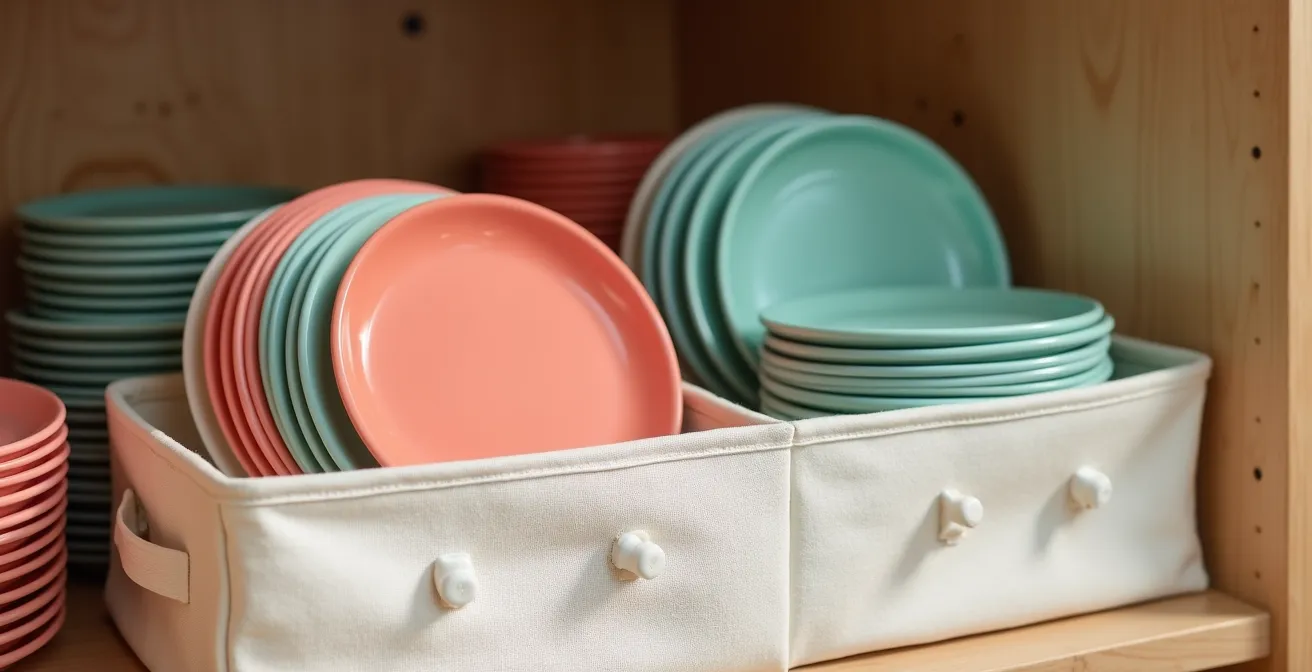
The storage environment itself also matters. Storing melamine in a sealed, airtight plastic container is a common mistake. This can trap trace amounts of moisture and lead to a musty smell or even mildew in humid climates. Instead, opt for breathable storage solutions like fabric-lined boxes or placing them on an open pantry shelf. Before storing them for the season, a final cleaning can make a big difference. A simple paste of baking soda and water is excellent for removing any lingering stains from cranberries or coffee, ensuring they go into storage perfectly clean.
- Use Separators: Always place coffee filters, felt rounds, or paper napkins between each stacked plate to prevent surface scratches.
- Choose Breathable Storage: Store in ventilated boxes or on open shelving, not in sealed plastic containers that can trap moisture.
- Deep Clean Before Storage: Use a baking soda paste to gently scrub away any tough stains to prevent them from setting in.
- Find a Cool, Dry Place: Keep the storage container away from direct sunlight and sources of heat or humidity.
- Add a Reminder: Label the storage container with a “Do Not Microwave” reminder for anyone who might unpack them next year.
By treating your festive tableware with the same care as your other cherished decorations, you ensure it will be a welcome and beautiful part of your family’s celebrations for many holidays to come.
How to Store Shovels and Buckets to Prevent Standing Water?
This question, at first glance, seems out of place. We’ve been discussing the delicate world of festive tableware, and suddenly we’re in the garden shed. But the underlying principle is exactly the same. Why do we take care to hang up a shovel or turn a bucket upside down? To protect it. We prevent standing water to stop rust on the shovel and to keep the bucket from becoming a breeding ground for mosquitoes. We do it to preserve the tool’s integrity and ensure it’s ready for use next season. It’s a simple act of stewardship for a durable good.
This is the exact same mindset we must apply to our “good” holiday tableware. A high-quality melamine plate is a durable good, just like a steel shovel. Leaving it stacked improperly where it can be scratched is the equivalent of leaving the shovel in a puddle to rust. Storing it in a damp basement is like letting the bucket fill with stagnant water. The threat isn’t rust, but a different kind of decay: surface scratches, permanent stains, and material degradation.
The concepts of material integrity and lifecycle assessment are not just for eco-consultants; they are practical principles we apply intuitively to many items we own. We protect what we value. The shift is to see our reusable tableware not as simple dishes, but as valuable assets in our “toolkit” for creating beautiful family traditions. They are investments worth protecting, just like any other quality tool.
By adopting this mindset of stewardship, you transform the simple act of washing and storing dishes into a meaningful practice that extends the life and beauty of your chosen items, reinforcing the wisdom of your sustainable choice.