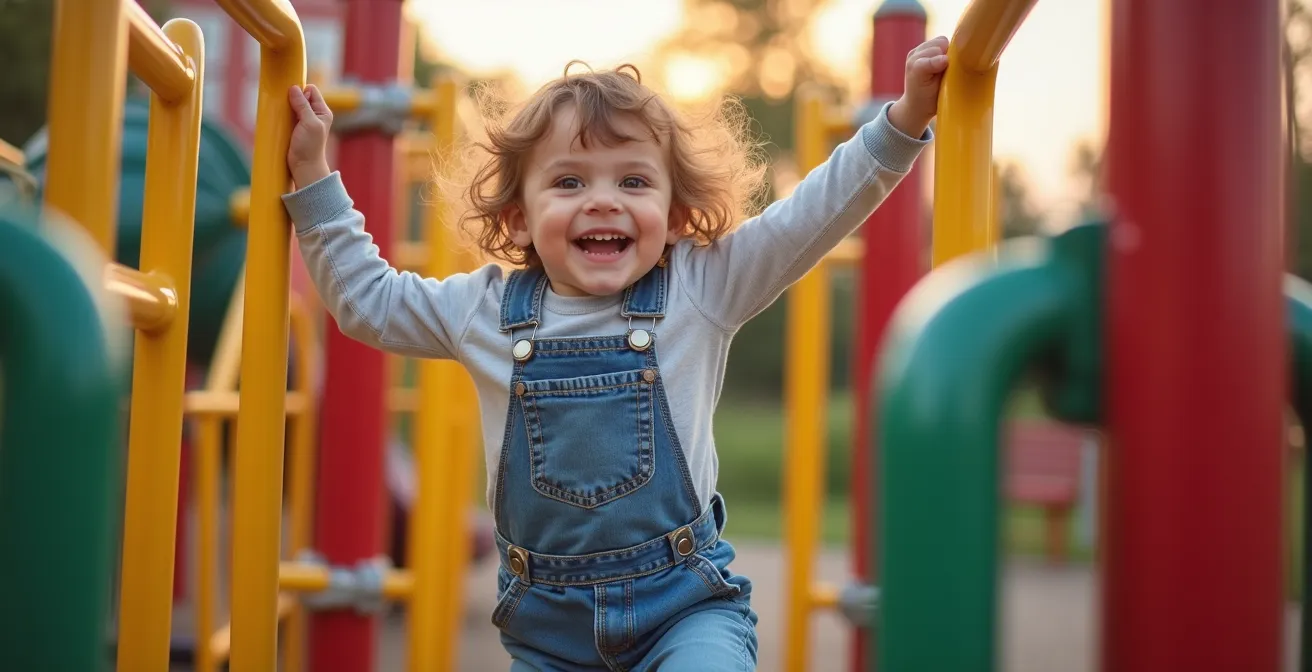
Finding the right jeans for a preschooler goes beyond simply looking for “stretch.” The key is to view denim as developmental apparel that can either support or hinder crucial motor skills. By focusing on specific fabric properties, seam construction, and fastener types, parents can choose jeans that provide true biomechanical freedom, allowing their children to climb, run, and squat without restriction, thereby fostering greater motor competence and physical confidence.
The classic look of denim is timeless, but for parents of active preschoolers, it often comes with a frustrating trade-off. You find a stylish pair of jeans, only to see your child struggling to climb at the playground, squat to pick up a toy, or move with the joyful abandon that defines childhood. The immediate conclusion is often that the jeans are just “uncomfortable,” a problem solved by switching back to sweatpants. This approach, however, misses a more fundamental issue.
The common advice is to look for stretch fabric or check the label for spandex. While not wrong, this is a surface-level solution. The real problem with stiff, poorly designed denim is that it actively works against a child’s physical development. It can restrict hip flexion, limit knee bend, and provide poor sensory feedback, all of which are critical for building motor competence. A child’s clothing shouldn’t just fit; it should facilitate movement.
But what if we shifted our perspective? Instead of seeing jeans as just a clothing item, we can start to evaluate them as a piece of developmental apparel. This guide moves beyond the basics of “stretch” to give you a child movement specialist’s framework for choosing denim. We will analyze how fabric composition directly impacts mobility, why the type of fastener can accelerate independence, and how nearly invisible construction details can make the difference between comfort and irritation. It’s about finding denim that doesn’t just look good, but actively supports your child’s freedom to move, explore, and grow.
This article breaks down the essential criteria for selecting denim that truly supports an active child’s development. Follow this guide to make informed choices that prioritize both comfort and mobility.
Summary: Finding Denim That Moves With Your Child
- Why Stiff Jeans Hinder Climbing Skills on the Playground?
- How to Test Denim Stretch in Store Before Buying for a Toddler?
- Snap Buttons vs. Zippers: Which Helps Potty Training Independence?
- The Seam Placement Error That Causes Chafing on Sensitive Waists
- How to Size Up Denim Without It Falling Down While Running?
- The One-Leg Test: How to Know If Your Child Can Handle 2 Wheels?
- Why Reinforced Knees Are Essential for Crawlers on Hardwood Floors?
- 3-Wheel or 2-Wheel Scooter: When to Make the Switch?
Why Stiff Jeans Hinder Climbing Skills on the Playground?
The playground is a child’s laboratory for physical learning. Activities like climbing are not just play; they are complex exercises that build strength, coordination, and proprioception—the body’s awareness of its position in space. When a child climbs, they are engaging multiple muscle groups, sequencing movements, and making constant balance adjustments. This process is fundamental to developing the gross motor skills needed for running, jumping, and overall physical confidence. However, this entire developmental process can be short-circuited by the wrong clothing.
Stiff, non-stretch denim acts as a physical barrier to this learning. A successful climb requires a full range of motion, particularly in the hips and knees. A child needs to be able to lift their knee high to reach the next foothold and flex their hips deeply to pull their body up. Rigid fabric fights against these movements, demanding more energy and making the action feel awkward and difficult. This restriction sends a discouraging signal to the child’s brain: “This movement is too hard.” Over time, this can lead to avoidance of challenging physical play, slowing the development of motor competence.
Furthermore, restrictive clothing interferes with sensory feedback. As children move, they learn the limits of their bodies. Well-fitting, flexible clothing moves with them, becoming an unnoticeable second skin. Stiff jeans, in contrast, provide constant, restrictive pressure. This “noise” can distract from the task at hand and disrupt the child’s ability to focus on their body’s movements. According to experts, a climbing frame engages multiple muscle groups, and this activity is essential for helping children understand where their bodies are in space. By choosing denim that allows for complete biomechanical freedom, you are not just providing comfort; you are removing a significant obstacle to your child’s physical education.
How to Test Denim Stretch in Store Before Buying for a Toddler?
The clothing label is your first clue to finding flexible denim, but it doesn’t tell the whole story. Words like “stretch” are not standardized, and a 1% spandex blend can feel vastly different from a 3% blend depending on the cotton weave and fabric weight. To truly assess a pair of jeans for your active preschooler, you need to become a hands-on detective in the store. Your goal is to simulate the demanding movements of a child: squatting, lunging, and high-stepping.
Before you even have your child try them on, perform the “scrunch and stretch” test. Grab a leg of the jeans with both hands and try to both stretch it lengthwise and scrunch it into a ball. Soft, flexible denim will stretch easily and feel pliable, not stiff. Next, perform a “squat test” with the garment itself. Hold the waistband and the ankles and try to bend the jeans into a deep squat position. If you feel significant resistance in the fabric at the knees or seat, it will be even more restrictive for your child.
Pay close attention to the fabric’s recovery. Stretch the material across the thigh area for a few seconds and then release it. Does it snap back to its original shape immediately, or does it look slightly saggy? Poor recovery means the jeans will become baggy and lose their shape after a few hours of play, leading to a sloppy fit that can be a trip hazard. A good blend of stretch and recovery ensures the jeans move with your child but also stay securely in place.
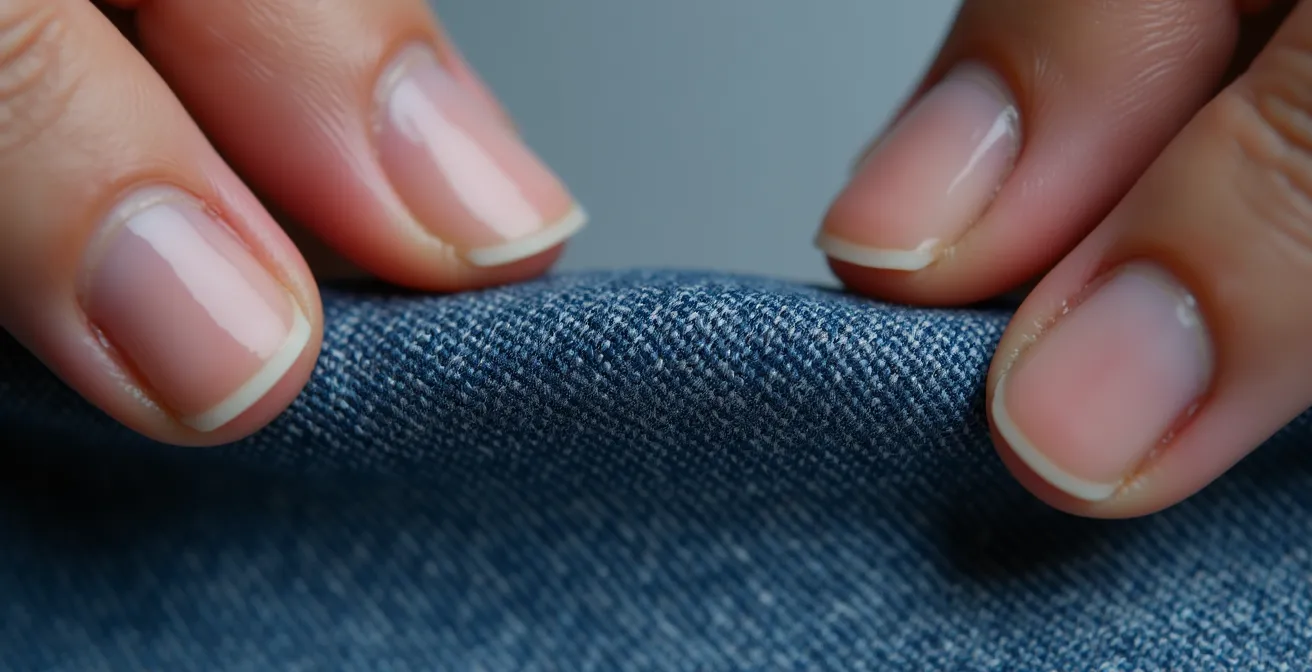
This close-up view reveals how flexible fibers are woven into the cotton, allowing the material to expand and contract. This built-in elasticity is what provides the freedom of movement essential for play. The table below breaks down what you can expect from different fabric compositions.
This comparative data, based on an in-depth analysis of stretch denim materials, shows a clear trade-off between stretch capacity and recovery rate. For most preschoolers, a 1-3% spandex blend offers the ideal balance for both active play and all-day wear.
| Fabric Type | Stretch Capacity | Recovery Rate | Best For |
|---|---|---|---|
| 100% Cotton Denim | 5-10% on bias only | No elastic recovery | Traditional look, less active wear |
| 1-2% Spandex Blend | 15-20% stretch | 95% recovery | Daily wear, moderate activity |
| 3-5% Spandex Blend | 25-35% stretch | 90% recovery | Active play, maximum flexibility |
| 4-Way Stretch (Spandex in warp & weft) | 40%+ all directions | 85% recovery | Sports, extreme movement |
Your In-Store Denim Stretch Checklist
- The Squat Test: Hold the jeans by the waist and ankles and bend them into a deep squat. Does the fabric resist or fold easily?
- The Fabric Feel: Rub the denim between your fingers. Is it soft and pliable or stiff and coarse? Lighter-weight denim often offers more stretch.
- The Recovery Check: Gently stretch a section of the fabric for five seconds. Does it snap back instantly or remain slightly stretched out?
- The Label Scan: Look for a blend containing at least 1-3% elastane or spandex for an optimal balance of flexibility and durability.
- The Walk-Around: If your child is with you, have them squat, bend, and walk around. Observe if their movement looks natural or restricted.
Snap Buttons vs. Zippers: Which Helps Potty Training Independence?
Once a child enters the potty-training phase, clothing transforms from a simple covering into a tool that can either foster or frustrate their growing independence. The speed and ease with which a preschooler can manage their own pants during a bathroom visit is a major factor in their success and confidence. When it comes to denim, the choice between snap buttons and traditional zippers isn’t just about style; it’s a critical decision for supporting self-sufficiency.
For most toddlers and preschoolers, snap buttons are superior to zippers for promoting independence. A single, sturdy snap button requires a straightforward push-pull motion that aligns well with developing fine motor skills. Zippers, on the other hand, demand a more complex sequence: aligning the pin and box, holding the fabric taut, and pulling upwards in a straight line. This can be a frustrating process for small hands, often leading to calls for help and a feeling of dependence.
However, the ultimate winner in the potty-training race is often the pull-on style with a fully elasticized waistband. This design eliminates fasteners altogether, allowing a child to simply push their pants down and pull them up without any manipulation. Many “jeggings” or soft denim styles adopt this approach. When evaluating these, ensure the elastic is wide and soft, not a thin band that could dig into the waist. An ideal design combines a pull-on style with a non-functional, decorative snap to give the look of “big-kid” jeans while maximizing ease of use.
The Seam Placement Error That Causes Chafing on Sensitive Waists
For a child, comfort is not a luxury; it’s a prerequisite for a happy, well-regulated day. Even the softest, stretchiest denim can become a source of misery if its construction details are overlooked. One of the most common but frequently ignored culprits of clothing-related discomfort is the seam. On a preschooler’s sensitive skin, a bulky, poorly placed, or scratchy seam can cause constant irritation and chafing, particularly around the waist and inner thighs.
The most significant error in children’s denim is the use of thick, overlocked seams on the inside of the waistband. While durable, these raised seams create a constant pressure point against a child’s soft skin. As the child runs, bends, and plays, the friction can lead to red marks and chafing. This is especially true for children with tactile sensitivity, for whom such a sensation can be intensely distracting and distressing. As experts in sensory-friendly clothing note that, “sensory-friendly clothing can benefit any child who experiences sensory sensitivities or discomfort” by promoting positive sensory experiences.
The solution is to look for jeans with flat-felled seams or a seamless waistband construction. Flat-felled seams, common in higher-quality adult jeans, encase the raw edges within the fabric, resulting in a smooth, flat finish on both sides. When examining a pair of jeans, turn them inside out. Run your finger along the waistband and inseam. If you feel a prominent, rough ridge, imagine that pressing against your child’s skin all day. Also, check for scratchy tags sewn into the back. Tagless, printed labels are always a better choice. Choosing denim with thoughtful seam construction is a small detail that makes a world of difference in a child’s day-to-day comfort.
How to Size Up Denim Without It Falling Down While Running?
Parents are all too familiar with the rapid growth of preschoolers. This often leads to the temptation to “size up” in clothing to extend its lifespan. With shirts or dresses, this is often forgiving. With jeans, however, sizing up can create a new set of problems: a waistband that gaps, pants that constantly slip down during active play, and a bunched, uncomfortable fit. This creates a safety hazard and a constant annoyance for a child who just wants to run freely.
The single most effective solution to this dilemma is the adjustable waistband. This feature, typically found on the inside of the jeans, consists of a piece of elastic with buttonholes that can be hooked onto buttons sewn inside the waist. It is a game-changing innovation that decouples the waist fit from the length of the pants. You can buy a size that provides the right length for your child’s legs (and a little extra room to grow), and then cinch the internal elastic to create a perfect, secure fit at their waist.
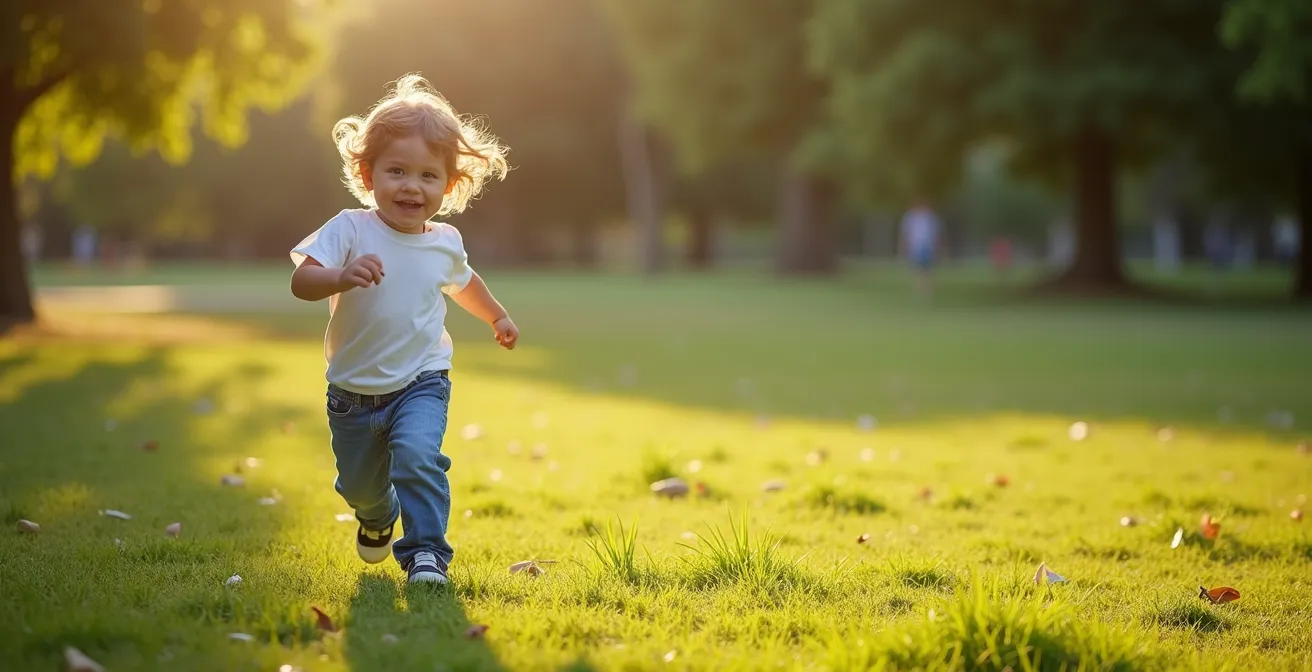
This allows the jeans to stay up during the most vigorous running and jumping, without being uncomfortably tight. As the child grows, you can simply move the elastic to the next button, extending the life of the garment significantly. As one parent shared in a discussion about fitting jeans on slim toddlers, “adjustable waists… are fantastic. They are REALLY adjustable so you can really cinch in the waist without affecting the length.” When shopping, always flip the waistband inside-out to check for this essential feature. It’s the key to achieving a fit that is both long-lasting and perfectly tailored to your child’s unique shape.
The One-Leg Test: How to Know If Your Child Can Handle 2 Wheels?
Transitioning from a tricycle or balance bike to a two-wheeled vehicle is a major developmental milestone that requires a combination of balance, coordination, and confidence. One of the simplest indicators of readiness is the “one-leg test”: can your child stand on one leg for several seconds without wobbling? Can they hop on one foot? This ability to isolate and control one side of the body while stabilizing the other is a direct predictor of the dynamic balance needed to pedal a bike or glide on a scooter.
However, before a child can even attempt this test, their apparel must allow for the necessary biomechanical freedom. Success in the one-leg test requires an unrestricted ability to bend the standing knee for stability and lift the other leg freely. If a child is wearing stiff, restrictive jeans, the fabric itself can disrupt their balance. The tension across the knee and hip of the standing leg can send confusing sensory signals, while the weight and stiffness of the fabric can make lifting the other leg feel unnaturally heavy.
In essence, the clothing becomes a variable that can skew the results of the test. A child who might have the core strength and coordination to balance could fail simply because their pants are working against them. This is why choosing the right apparel is a prerequisite for accurately assessing motor skills. As one expert guide on children’s apparel states, “Tight clothing can restrict movement and even impede circulation,” which is the antithesis of what a child needs when learning a complex new skill. For a true assessment, ensure your child is in soft, flexible bottoms that act as a second skin, not as a constraint.
Key Takeaways
- Prioritize Mobility: The primary function of a preschooler’s jeans should be to enable, not restrict, movement. This is crucial for motor skill development.
- Test Beyond the Label: Physically test denim for stretch, softness, and recovery in-store. A label’s claim of “stretch” is not enough.
- Focus on Independence: Choose fasteners (like snaps or pull-on styles) and waistbands (adjustable) that empower your child to dress themselves and manage potty breaks.
Why Reinforced Knees Are Essential for Crawlers on Hardwood Floors?
For babies and toddlers in the crawling phase, the world is explored at floor level. Their knees become primary points of contact with every surface in your home, from soft carpets to abrasive hardwood and tile. While crawling is a vital stage for developing bilateral coordination and core strength, it is also incredibly tough on clothing. A standard pair of soft jeans or leggings can wear through at the knees in a surprisingly short amount of time, leading to constant replacements and unexpected holes.
This is where reinforced knees become an essential feature, not a mere add-on. This design element involves sewing an extra layer of durable fabric, often a tough cotton-canvas or a patch of the denim itself, onto the inside of the jeans at the knee area. This simple addition dramatically increases the garment’s durability, protecting it from the constant friction of crawling on hard surfaces. It prevents the dreaded worn-out-knee look and saves parents money in the long run.
Some brands have even innovated beyond simple patches, creating “iron knee” technology where the reinforcement is bonded to the fabric for a seamless feel. This is particularly beneficial as it adds durability without creating a bulky internal seam that could irritate a child’s skin. When choosing jeans for a crawler or an active toddler who spends a lot of time on the floor, always feel the knee area. If it feels substantively thicker and more durable than the rest of the leg, you’ve found a pair built to withstand the rigors of early exploration. It’s a practical choice that protects both your child’s knees and your wallet.
3-Wheel or 2-Wheel Scooter: When to Make the Switch?
Deciding when to transition a child from a stable 3-wheel scooter to a more challenging 2-wheel model is a common question for parents. There is no magic age, as the answer depends entirely on the child’s individual development of balance and coordination. A 3-wheel scooter provides a stable platform, allowing a child to focus solely on the push-and-glide motion. A 2-wheel scooter, however, introduces the dynamic element of balancing, requiring the rider to constantly make micro-adjustments with their core and body weight to stay upright.
The key indicator for readiness is confidence and proficiency on the 3-wheel scooter. Can your child glide for long distances after a single push? Can they navigate gentle turns with ease? If so, they have likely mastered the basics and are ready for the next challenge. The transition itself should be framed as an exciting new step, not a test. Start on a smooth, flat surface with plenty of open space, and always ensure they are wearing a helmet and other appropriate safety gear.
Crucially, their clothing must be up to the task. The wider range of motion and more dynamic balancing required by a 2-wheel scooter means that restrictive clothing is simply not an option. Jeans must have enough stretch to allow for deep knee bends when pushing off and for quick leg movements to regain balance. Excessively baggy jeans should be avoided as they can get caught in the wheels. A well-fitted, flexible pair of jeans provides the necessary biomechanical freedom for your child to learn and master this new skill safely and confidently. Before you make the switch in equipment, first ensure their apparel is ready for the upgrade.
Ultimately, selecting the right pair of jeans for your preschooler is an act of advocacy for their physical development. By applying these principles—testing for true stretch, prioritizing features that foster independence, and inspecting for comfort in the details—you can confidently choose denim that supports their every climb, run, and leap.
Frequently Asked Questions on Comfortable Kids’ Jeans
What type of waistband is best for potty training toddlers?
For toddlers who are learning to dress themselves, clothing with elastic waistbands and flexible fits, like joggers or pull-on jeans, is ideal. They are easy to manage and promote independence during bathroom visits.
Are pull-on styles better than fasteners for independence?
Yes, for young children, comfortable and easy-to-wear clothes make it significantly easier for them to dress themselves. Pull-on styles remove the challenge of manipulating snaps or zippers, building their confidence.
How do adjustable waistbands help during potty training?
Adjustable waistbands are excellent for achieving a perfect fit, but they can also simplify bathroom visits. By ensuring the pants stay up securely, they prevent fumbling with sagging clothes, making the process quicker and less frustrating for a toddler.