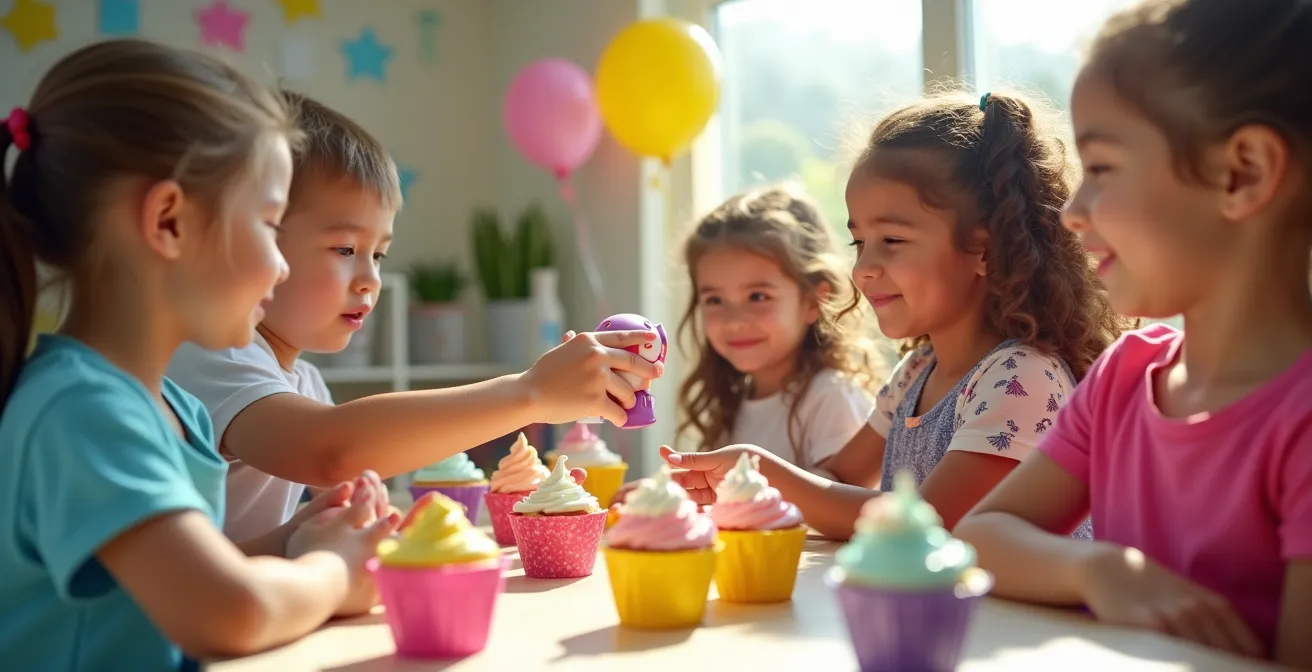
In summary:
- Shift from enforcing rules to “hygiene by design,” making clean choices easy and fun.
- Replace communal snack bowls with festive, individual portions to prevent cross-contamination.
- Prioritize soap and water over sanitizer for visible dirt and sticky hands, and make washing a game.
- Use a separate cupcake for blowing out candles to keep the main cake germ-free for guests.
- Communicate health expectations kindly and proactively before the party to avoid awkward situations.
As parents, we’ve all felt that familiar flicker of anxiety. You’ve planned the perfect party: the decorations are up, the games are ready, and a gaggle of excited children is about to descend. But amidst the joy, a modern concern lingers—how do you manage the inevitable spread of germs in a world more conscious of health than ever before? The common advice feels sterile and restrictive: ban shared foods, constantly police hand-washing, and create an atmosphere that feels more clinical than celebratory. Many parents worry that enforcing strict hygiene will make them the “fun police,” dampening the very spirit of the occasion.
The challenge is real. We want to protect our children and their friends, but we also want to create memories of laughter, connection, and carefree fun. For years, the go-to has been a bottle of hand sanitizer and a hopeful “please cover your cough.” But what if this approach is fundamentally flawed? What if the secret to a healthy party isn’t about imposing more rules, but about rethinking the environment itself?
This guide introduces a different perspective, one rooted in public health strategy: hygiene by design. Instead of fighting against kids’ natural behaviors, we’ll explore how to craft a party experience where the healthiest choice is also the easiest and most appealing. It’s about being smart and proactive, not paranoid and reactive. We’ll show you how to fortify your celebration with invisible layers of protection that keep the focus on fun, from creatively serving snacks to reimagining the iconic candle blowout. The goal is to create a space so thoughtfully prepared that hygiene happens naturally, allowing you to relax and enjoy the party as much as the kids do.
This article provides a complete framework for hosting a healthier celebration. We will explore the science behind germ transmission in social settings and offer practical, creative solutions for every aspect of your party plan.
Summary: A Practical Guide to Healthy Kids’ Parties
- Why Shared Snack Bowls Are the #1 Vector for Viruses at Parties?
- How to Plate “Single-Serve” Snacks That Look Festive, Not Clinical?
- Hand Sanitizer vs. Soap Station: Which Is More Effective for Sticky Fingers?
- The “Blow Out the Candles” Alternative That Keeps the Cake Germ-Free
- When to Ask a Coughing Guest to Stay Home Without Being Rude?
- How Often Should You Replace the Bottle Brush to Avoid Mold?
- Mud Kitchens: Why Dirt Play Is Good for the Microbiome?
- Which Festive Tableware Is Safe, Unbreakable, and Eco-Friendly for Kids?
Why Shared Snack Bowls Are the #1 Vector for Viruses at Parties?
The classic, generous bowl of chips, pretzels, or candy is a party staple, but from a public health standpoint, it’s a major liability. Think of it as a communal hub for germs. Dozens of tiny hands, not all of them perfectly clean, reach in and out over the course of the party. This creates a direct pathway for cross-contamination. A child who has a lingering cold, has just touched a shared toy, or simply forgot to wash their hands after using the restroom can introduce viruses and bacteria into the bowl. The next child to reach for a snack inadvertently picks them up.
This isn’t just about visible dirt; it’s about the microscopic world. Viruses like the common cold, influenza, and norovirus can survive on surfaces—and food is a surface—for hours. Each dip into the bowl is an opportunity for transmission. Furthermore, the “double-dip” phenomenon, while often a joke, is a real risk. A child takes a bite of a chip and dips it back in, directly transferring saliva and any pathogens it contains into the shared dip or bowl.
The principle of separating food to prevent contamination is a cornerstone of food safety. While we often apply this to raw and cooked meats in the kitchen, the logic extends to a party setting. A shared snack bowl effectively breaks this rule by mixing the “input” from many different sources (hands) into a single container. Adopting a mindset of “hygiene by design” means eliminating this single point of failure and re-engineering how snacks are offered from the start, making the party safer for everyone without a single word of instruction needed.
How to Plate “Single-Serve” Snacks That Look Festive, Not Clinical?
The solution to the shared-bowl problem isn’t a sterile, pre-packaged world. It’s about embracing creativity to make individual portions look even more appealing than a giant bowl. This is the principle of “The Generosity of One”—offering abundant, single-serve items so beautifully that no one even thinks about sharing. The goal is a presentation that screams “celebration,” not “contamination control.” Forget sad-looking plastic bags; think vibrant, fun, and easy for little hands to grab.
To achieve this, consider the containers. Use colorful silicone baking cups for portions of fruit, crackers, or trail mix. Small, clear plastic cups can be used to create individual “veggie and dip” servings, with a dollop of hummus or ranch at the bottom and veggie sticks “planted” inside. Mini paper cones are perfect for popcorn, cheese puffs, or small cookies. You can even serve mini pizzas, individual mac and cheese cups, or small skewers of fruit and cheese. This approach not only enhances hygiene but also helps with portion control and can reduce food waste.
The key is arranging these individual items in an inviting way. Create a rainbow pattern with the colorful cups, or arrange them on tiered platters to add height and visual interest to your snack table. This strategy transforms a hygiene measure into a core part of your party’s aesthetic.

As you can see, this approach doesn’t just solve a hygiene problem; it creates a “wow” factor. Children are often more excited to have their *own* special cup or cone than to scoop from a communal bowl. It feels more special and personalized. By designing the snack experience this way, you make the safe choice the most desirable one, effortlessly guiding guests toward healthier habits.
Hand Sanitizer vs. Soap Station: Which Is More Effective for Sticky Fingers?
In the age of portable hygiene, hand sanitizer has become a go-to for many parents. It’s quick, convenient, and certainly better than nothing. For a hand sanitizer to be effective at killing most germs, it must contain at least a 60% minimum alcohol content required for effective hand sanitizer. It works well for quickly disinfecting hands that are not visibly soiled, for instance, between different play activities. However, it’s not a silver bullet, especially at a kids’ party where sticky fingers and visible grime are the norm.
The primary limitation of hand sanitizer is that it doesn’t work well on visibly dirty or greasy hands. It can’t penetrate through dirt, food residue, or sugary stickiness to kill the germs underneath. This is where traditional soap and water shine. The mechanical action of scrubbing with soap and rinsing with water physically removes dirt, allergens, and germs from the skin, washing them down the drain. For situations like post-snack time, after playing outside, or after using the bathroom, soap and water are unequivocally more effective.
Therefore, the best strategy is a two-pronged approach. Have hand sanitizer available for quick cleans, but establish a dedicated and appealing hand-washing station as the primary method. This is a core part of “Festive Fortification”—turning a chore into a fun part of the party.
| Situation | Best Choice | Why |
|---|---|---|
| Visible dirt or grime | Soap and water | Mechanical action removes physical debris |
| After eating sticky foods | Soap and water | Removes sugar, allergens, and germs |
| Quick clean between activities | Hand sanitizer | Convenient when hands appear clean |
| After bathroom use | Soap and water | More effective for fecal bacteria |
To encourage its use, don’t just point to the bathroom. Create an experience. Set up a station with fun, themed soap dispensers, colorful towels, and maybe even a small stool for the littlest guests. Making it a game can dramatically increase participation.
Your Action Plan: Making Hand Washing Fun
- Sing ‘Happy Birthday’ twice through while washing (to ensure the recommended 20 seconds).
- Use color-changing soap that transforms as it lathers to visually engage children.
- Make it a game by pretending the soap bubbles are “chasing the germs away.”
- Set up themed soap dispensers that match the party’s theme (e.g., a dinosaur soap pump for a dino party).
- Create an official “hand washing station” with fun towels, decorations, and easy access for kids.
The “Blow Out the Candles” Alternative That Keeps the Cake Germ-Free
The moment the lights dim and the birthday cake appears, glowing with candles, is the magical centerpiece of any party. But the tradition of the birthday child making a wish and blowing out the flames comes with an unseen consequence: a significant spread of germs directly onto the cake that everyone is about to eat. It may feel like a small thing, but from a hygiene perspective, it’s a direct hit.
Scientific studies have confirmed this. When someone blows out candles, the aerosolized droplets from their breath spray all over the cake’s surface. In fact, research has shown that blowing out candles creates up to 15 times more bacteria on the icing compared to a cake that hasn’t been blown on. For a child who might be unknowingly at the start of a cold, this can turn the celebratory dessert into a super-spreader event.
Fortunately, you can preserve this cherished tradition while completely eliminating the risk. The solution is simple and elegant: give the birthday child their own personal “wish” cupcake or a mini cake. Place a single candle on this small treat, let them have their magical moment to blow it out, and then serve the large, pristine, and germ-free cake to all the guests. This small change has zero impact on the child’s experience but has a massive impact on the health of the party.

This approach is a perfect example of “hygiene by design.” It doesn’t require any awkward instructions or take away from the fun. The birthday child still gets their special moment, the guests get a clean slice of cake, and parents can have peace of mind. It’s a simple, respectful, and highly effective strategy that honors both tradition and health.
When to Ask a Coughing Guest to Stay Home Without Being Rude?
This is perhaps the most socially delicate aspect of hosting a party. You want to protect everyone, but you don’t want to offend a friend or make another parent feel judged. The key to navigating this is proactive, gentle, and universal communication—what we can call a “Diplomatic Health-Check.” Don’t wait for a sick child to show up at your door; set the expectation beforehand in a kind and friendly way. This frames the rule as a community effort to keep all the children healthy, not as a personal judgment.
The best place to start is the party invitation. A short, lighthearted note can set the tone. Something like, “To ensure all our little guests have a wonderful and healthy time, we kindly ask that you celebrate with us from home if anyone in your family is feeling under the weather. We’ll be sure to save you a party favor!” This communicates the policy clearly and graciously before anyone has to make an awkward day-of decision.
As the Dr. Noze Best medical team highlights, this is a common point of frustration for parents. They note:
It’s frustrating when someone sends a sick child to a party or group event. RSV, colds, and the flu spread quickly as little ones share toys and gather close together.
– Dr. Noze Best medical team, Preventing a Cold Outbreak at Your Next Birthday Party
If you’re still concerned, a quick, friendly text the day before can also help: “So excited to see you all tomorrow! Just doing a quick, friendly health check to make sure everyone is feeling 100% for the fun.” If a child does arrive with a noticeable cough, you can gently suggest a quieter activity away from the main group, framing it as a way for them to rest rather than as a quarantine. Here are a few scripts for various situations:
- Pre-party message: “To keep all our little ones healthy, if anyone’s feeling under the weather, we’ll miss you but will save a party favor!”
- Day-of check-in text: “Looking forward to seeing you! Just checking everyone’s feeling well before the fun begins.”
- For on-site situations: “Let’s set up a cozy corner with books for [child’s name] to rest – the party energy might be too much while they’re not feeling 100%.”
- Follow-up for absent guests: “We missed you today! I’ve saved your party bag – let’s arrange a healthy day to catch up.”
How Often Should You Replace the Bottle Brush to Avoid Mold?
The party is over, but the germs might not be. Your cleanup tools, especially those used for washing dishes and baby bottles, can become breeding grounds for bacteria and mold if not properly maintained. While a “bottle brush” is a specific concern for parents of infants, the principle applies to all kitchen cleaning tools after a party: sponges, dish brushes, and cleaning cloths. These items are constantly moist and come into contact with food particles, creating the perfect environment for microbial growth.
For bottle brushes specifically, or any brush used for cleaning children’s cups and dishes, a good rule of thumb is to replace them every 30 to 45 days, or sooner if the bristles become frayed or discolored. After each use, they should be thoroughly rinsed, shaken out, and stored upright in a ventilated container to dry completely. Trapped moisture is the primary cause of mold growth.
After a party, your cleaning tools have worked overtime. It’s crucial to sanitize them immediately. Kitchen sponges are notoriously porous and can harbor millions of bacteria. They should be replaced every one to two weeks, especially during periods of heavy use. In between replacements, you can sanitize a damp sponge by microwaving it for two minutes (ensure it contains no metal and is microwave-safe) or running it through the sanitize cycle of your dishwasher. Dish brushes can also be sanitized in the dishwasher. Taking these steps ensures that the tools you use to clean are not inadvertently spreading germs from one dish to another, protecting your family long after the guests have gone home.
- Run dish brushes and sponges through the dishwasher’s sanitize cycle after heavy party cleanup.
- Microwave damp, non-metallic sponges for 2 minutes to kill bacteria and mold.
- Store all cleaning tools, including bottle brushes, in a dry, ventilated area to prevent moisture buildup.
- Replace kitchen sponges every 1-2 weeks and bottle/dish brushes every 1-2 months, or sooner if they show signs of wear.
Key takeaways
- The goal of party hygiene is not a sterile environment, but a balanced one designed to reduce the transmission of harmful pathogens.
- Small, proactive design choices—like individual snacks and a dedicated “wish cupcake”—are far more effective than reactive rules.
- Effective hand hygiene relies on knowing when to use soap (for visible dirt) versus sanitizer (for quick cleans) and making the process fun and accessible for children.
Mud Kitchens: Why Dirt Play Is Good for the Microbiome?
After focusing so intensely on preventing the spread of harmful germs, it’s crucial to introduce a point of balance: not all germs are bad. In fact, exposure to a diverse range of environmental microbes is essential for developing a robust and healthy immune system. This concept is often referred to as the “hygiene hypothesis,” which suggests that ultra-clean environments may contribute to a rise in allergies and autoimmune issues in children. This is where activities like playing in the dirt come in.
A “mud kitchen” or simply unstructured outdoor play allows children to come into contact with a wide variety of harmless microorganisms found in soil. This exposure helps “train” their immune systems to distinguish between genuine threats and harmless environmental substances. It populates their skin and gut with diverse bacteria, contributing to a healthy microbiome, which is increasingly linked to everything from digestion and immunity to even mental health.
This perspective is shared by many pediatric health experts who caution against excessive fear of germs. As Dr. Danelle Fisher, a pediatrician, states in one discussion on the topic:
The reason we’re seeing more food allergies in children, according to one theory, is that we’re doing too good a job with hygiene
– Dr. Danelle Fisher, Providence Saint John’s Health Center
The Case for Healthy Germs
In an article from Children’s Hospital Colorado, experts emphasize that a germ-free life is neither possible nor desirable. They explain that many bacteria are vital for a healthy gut and skin. Dr. Samuel Dominguez cautions against a constant fear of germs, stating, “Germs are everywhere. You cannot live a germ-free life… we have to accept that everyone is going to get quite a few germs along the way, and that’s just part of living.” This reinforces the idea that the goal is not sterilization, but a smart, balanced approach to hygiene.
So, how do we reconcile this with party hygiene? The key is differentiation. We want to prevent the rapid transmission of high-load viruses and bacteria passed directly from person to person (like via a shared snack bowl or a cough). We do not need to prevent a child from getting a bit of dirt on their hands while playing outside. The message isn’t “let kids be sick,” but “let kids play.” Encourage outdoor activities at your party, and don’t panic about a little mud. Then, have your fun and effective hand-washing station ready for them before they come inside to eat.
Which Festive Tableware Is Safe, Unbreakable, and Eco-Friendly for Kids?
The plates, cups, and utensils you choose are the final piece of your “hygiene by design” strategy. For kids’ parties, the ideal tableware sits at the intersection of three key criteria: it must be safe for contact with food, durable enough to prevent breakage, and ideally, environmentally friendly. This is especially important given that young children are more vulnerable to foodborne illnesses. For example, CDC data reveals that young children face significantly higher risks, as children under 5 are three times more likely to be hospitalized if they contract a Salmonella infection.
Traditional disposable paper plates are convenient, but they can be flimsy. Single-use plastics are a major environmental concern. Reusable options from your own kitchen, like ceramic, risk being broken by enthusiastic toddlers. Thankfully, a new generation of materials offers excellent alternatives specifically designed for these situations.
Materials like bamboo, wheat straw, and food-grade silicone have become popular choices. Each has its own profile of benefits and drawbacks. Silicone is virtually unbreakable and non-toxic, making it a top choice for safety and durability, though it is not biodegradable. Wheat straw is a fantastic eco-friendly option as it’s compostable and BPA-free, though it can be prone to staining. Bamboo is another biodegradable choice but can sometimes splinter, making it better for slightly older children. Understanding these trade-offs allows you to select the best material for your specific needs.
| Material | Safety | Eco-Friendly | Durability | Best Use |
|---|---|---|---|---|
| Bamboo | Food-safe but can splinter | Biodegradable | Moderate | Older kids’ parties |
| Wheat Straw | BPA-free, safe | Compostable | Can stain | Light snacks |
| Silicone | Non-toxic, BPA-free | Not biodegradable | Unbreakable | Main meals |
| FSC Paper | Food-grade safe | Compostable | Single-use | Cake service |
By thoughtfully selecting your tableware, you add one final, crucial layer of protection and care. It reinforces the message that the party is not only fun but also safe and considerate, from the food on the plates to the plates themselves.
By embracing a “hygiene by design” philosophy, you can host a vibrant, joyful, and safe celebration. It empowers you to move beyond a state of constant worry and instead become a creative architect of a healthy party environment. These strategies allow you to protect your guests effectively while keeping the spirit of fun and community at the heart of the day. To put these ideas into practice, the next logical step is to start planning your party layout and supplies with these principles in mind.